



Earlier this month, the EAT Lancet Commission released its long-awaited update on what it will take to build a healthy, sustainable, and just food system by the middle of this century. The headlines were bold with a call for dietary change, a shift in how we farm, and a renewed focus on justice and fairness. As always, though, the real story is found in the details and in what the report means for farmers, rural communities, and anyone who cares about the future of British food.
What the Report Says
The Commission’s new report is ambitious. It argues that food systems must change if we are to stay within the planet’s environmental limits, tackle public health crises, and ensure fairness for everyone involved. At the heart of the report is the “Planetary Health Diet,” which is mostly plant-based but still allows for moderate amounts of animal-sourced foods. The authors claim that shifting to this diet could prevent millions of premature deaths every year and cut food system greenhouse gas emissions by half.
But it is not just about what we eat. The report calls for systemic change in the food environment. That means healthier school meals, better public procurement, and stronger regulation of food markets. Justice is much more prominent this time. The Commission talks about living wages, decent work, and the need to protect marginalised groups, pointing out that the wealthiest drive the most harm, while billions cannot afford a healthy diet.
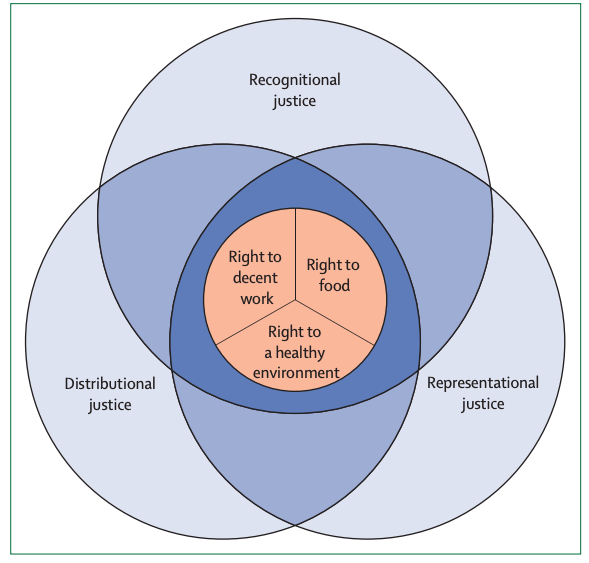
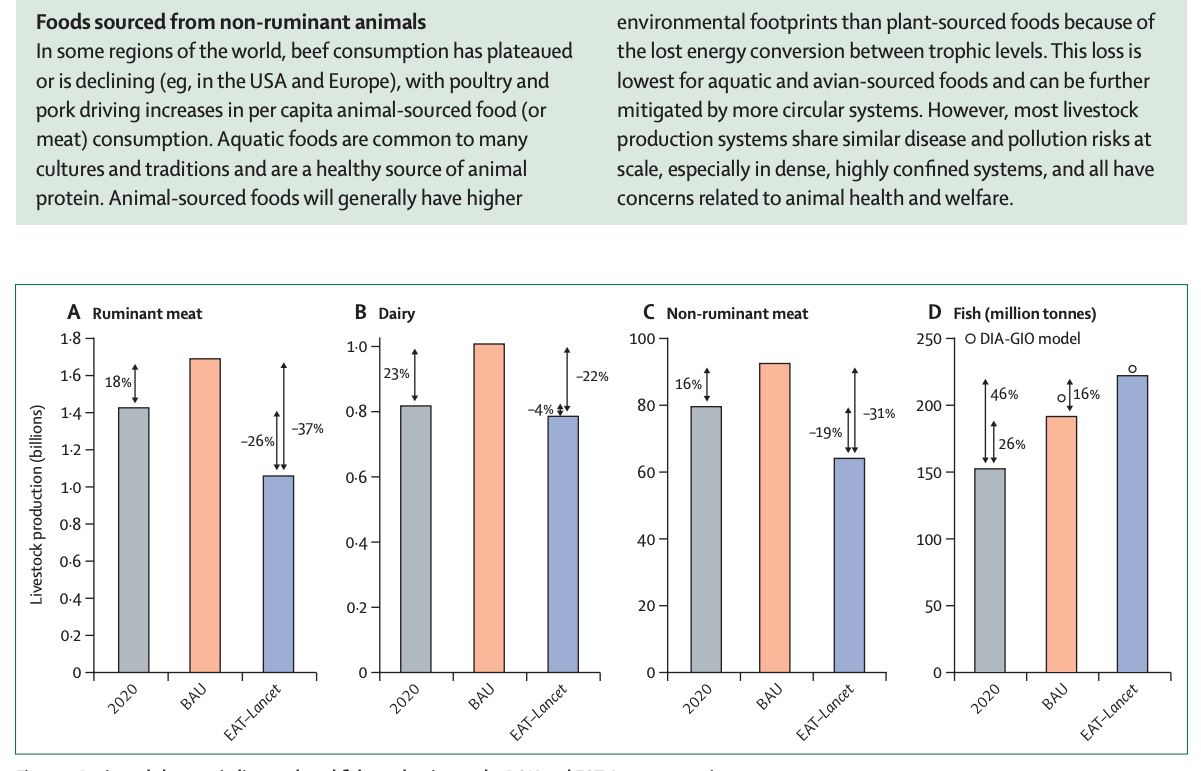
For farming, the recommendations are familiar but challenging. The report proposes moving away from intensive livestock production, especially ruminants, and increasing the output of fruit, vegetables, nuts, and legumes. It calls for more sustainable and ecological farming, less reliance on pesticides and fertilisers, and stronger protection for natural ecosystems.
The Commission is clear that no single policy will be enough. Instead, it calls for bundles of context-specific policies, strong targets and monitoring, and a commitment to public investment and good governance.
Why This Matters in the UK
Much of what the report discusses is already playing out here. The UK is facing its own food security challenges. We are not self-sufficient in fruit and veg. Diet-related illness and food poverty are rising. Farmers are caught between climate targets, supermarket pressure, and a policy landscape that often feels disconnected from rural realities.
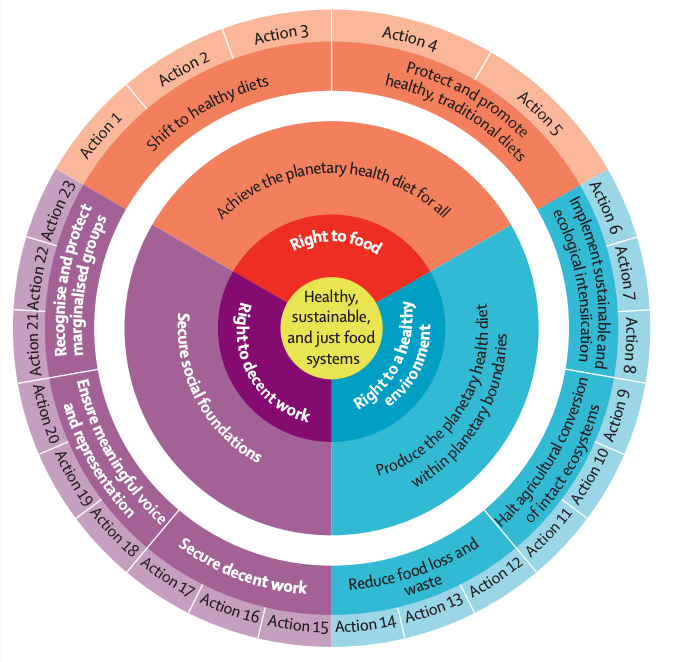
The EAT–Lancet report’s focus on public procurement, support for horticulture, and fair work speaks directly to these issues. Its emphasis on justice and support for smallholders echoes what many UK farmers and campaigners have been calling for.
What NGOs and Campaigners Are Saying
Civil society groups in the UK have broadly welcomed the ambition of EAT–Lancet. Organisations like Sustain, the Food Farming and Countryside Commission, the Soil Association, and the Landworkers’ Alliance all support the focus on health, justice, and environmental limits. They are calling for government leadership, a joined-up Food Strategy, binding targets, and real investment in home-grown healthy food.
But these groups are also clear that healthy, sustainable food must be affordable and accessible for everyone. There is strong support for universal free school meals, fair prices for farmers, and meaningful investment in agroecological transition. Many warn that a one-size-fits-all approach will not work. Policies need to fit local realities, especially in rural and low-income communities. There is a strong emphasis on food sovereignty and local control, and a demand to tackle corporate power in the food system.
Critical Voices and What Gets Missed
Not everyone is convinced by the Commission’s approach. Gunnar Rundgren, an agroecologist and food systems writer, offers a thoughtful critique. He argues that starting with a prescribed diet is the wrong approach. Instead, he believes real transformation should begin with how we farm using regenerative, organic, and place-based systems. Diets will follow from healthy agro-ecosystems, not from top-down targets.

Gunnar points out that most recommendations are still grounded in market thinking and do not challenge the economic system that drives inequality and ecological problems. He is particularly concerned about the push to reduce grasslands and ruminant livestock, seeing this as a loss for both ecology and rural communities. He is sceptical that ecological intensification and input reductions can maintain yields and lower prices, especially in high-yielding systems. While he supports many of the report’s recommendations, he finds the proposed policies too weak to drive real change.
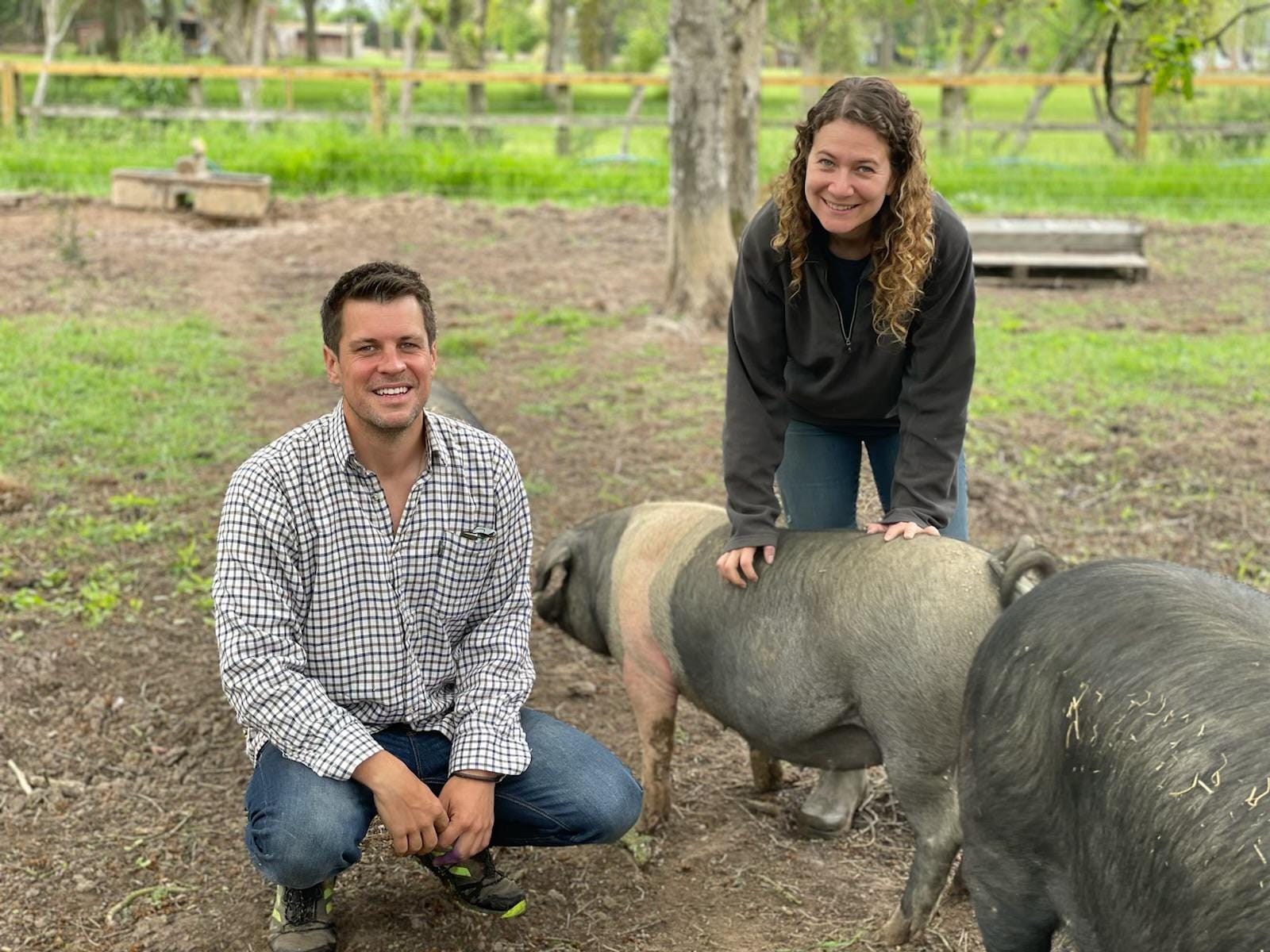
Helen’s Perspective
From my own experience, I see many of the same gaps and contradictions that I have written about before, especially in relation to the UK’s National Food Strategy. The EAT–Lancet report feels like progress on the surface. It is ambitious and justice-focused, and it speaks to many of the concerns raised by farmers and food campaigners. But when you look closer, the same old problems appear.
The agenda to reduce livestock numbers is likely to be justified in the name of climate targets, but there is little transparency around welfare standards, GMOs, or chemical use. There is still no clear method-of-production labelling, and the gold standards that are promoted do not always match the reality on the ground. Small and family farms, the backbone of British food, are still left out, while big players stand to benefit most.
Metrics and targets are all well and good, but there is little clarity about who will hold the industry to account. Until there is real funding and practical support for those growing our food, these strategies risk leaving the real problems unsolved. Most importantly, if healthy, sustainable food is not genuinely affordable and accessible for everyone, then who is this transformation really for? There is a lot of talk about food justice and place-based solutions, but little sign of the real investment needed to make it happen.
I also see a contradiction between EAT–Lancet and the UK’s National Food Strategy. The report encourages us to move away from intensive farming, but at the same time, the old models still dominate policy. I agree with Gunnar Rundgren that diet is the wrong entry point and that reducing grasslands and ruminant livestock is not the answer. As the Sustainable Food Trust says, it is not the cow, it is the how. Rather than eliminating livestock, we should be focusing on how to produce animal foods in a way that is regenerative and locally adapted, using homegrown, soy-free feeds. If we are asking people to eat locally and seasonally, why can’t we do the same for our animals? Before global supply chains, farmers managed just fine without flying in feed from all over the world.
Final Thoughts
On paper, the EAT–Lancet vision is positive. It is ambitious, holistic, and grounded in science. But for those of us who have seen policy promises come and go, it is hard not to feel a sense of déjà vu. Until there is meaningful funding, clear accountability, and real support for farmers and rural communities, these strategies risk becoming another set of well-meaning documents that leave the root problems unsolved.
Sources
The EAT–Lancet Commission on healthy, sustainable, and just food systems
Time to back our farmers and make eating better the easy choice - Sustain
Food For A Fair Future - Food, Farming & Countryside Commission
If just 5% of my readers tipped £1/$1 this essay would pay for itself in terms of time spent working on it.
I dwell on the ruminant attacks a lot … but as importantly, I do not like the notion of a nation not having an independent food supply. That is what bothers me most about this planetary plant based diet idea. It is naive. It might work for a while, but bad things happen and famine isn’t high on my list of things to endure. An aside, is progress being made in the UK in feed additives to reduce methane in cattle on feed?