



I was half way through a Guardian piece about Riverford when I felt that familiar mix of hope and suspicion, because the headline story is both encouraging and bleak at the same time. Sales are up, operating profits are down, and even a business built on organic is still absorbing costs to keep customers on side, which makes you wonder what organic is really worth in a moment when farming feels less able to carry extra risk.
When I was farming pigs, I learned quickly that labels do not keep the rain off your back, and they do not pay your feed bill when the sums stop adding up. Most farmers are not looking for a lifestyle badge, they are looking for a way to keep going, and that is why I keep coming back to organic, not as moral high ground, but as one of the few words in British farming that still has a defined meaning and a public story attached to it.
So I want to look at why organic appears to be working particularly well in veg and dairy right now, why that matters as regenerative gets diluted by corporate marketing, and what I think the real question is. Not whether organic is good, but who can actually afford to get there.
So What Do We Mean By Organic
Organic is one of those words that gets used as shorthand for all sorts of hopes and frustrations, so it helps to be clear about what we mean when we say it. In practical terms it is a defined standard backed by inspections and rules, it limits synthetic fertilisers and pesticides, it sets requirements around animal welfare and feed, and it forces a level of record keeping that can feel relentless when you are already stretched.
It is not perfect, and it does not automatically mean low carbon, or local, or fair, or small scale. But it is harder to stretch into meaninglessness than regenerative has become, and that is the part that has my attention, because regenerative is now in corporate sustainability reports and marketing campaigns that promise soil health and nature recovery without ever saying what has changed on the ground.
I do not dismiss regenerative farming, because I have seen regenerative ideas make real differences on real farms. I say it because when a word becomes a brand asset it starts to lose its edges, and if regenerative can mean anything it stops protecting the farmers who are taking the risk and doing the hard work, whereas organic, for all its flaws, still has teeth, and in a market where trust is everything, that matters.
Why I Keep Coming Back To This
I should say up front that I am no expert in the dairy or veg sector, because I spent my farming life in meat and pigs. I am looking at these two because they are where the clearest signals are right now, and because they expose the same question underneath, which is who gets to hold onto value in a system built to squeeze.
A Quick Note From Pigs
Before I get too far into veg and dairy, I want to explain where I am coming from. On our pig farm, organic was the highest standard in my mind, and we were not certified, but we practised to organic standards as our baseline and tried to do better where we could, which meant homegrown cereals turned into pig feed, no routine antibiotics, no mutilations, ample grazing space, and rotating land to prevent poaching.
We would have liked to go organic, but for a new business the certification costs were too high, and there was no clear subsidy available to help us make the jump while we were still finding our feet, which is one reason I get prickly when organic is talked about like a simple choice. Sometimes it is not a values problem, it is a cashflow problem.
I also saw what the organic label can do for small farmers. At Hampshire Farmers’ Market there was another small meat producer selling organic certified beef, lamb, and pork, and it was noticeable that when they were there, the other meat producers did not do as well, because consumers were naturally drawn to the word organic, not because they had read the standards, but because it felt like something they could trust.
Veg Is Where The Numbers Are Clearest
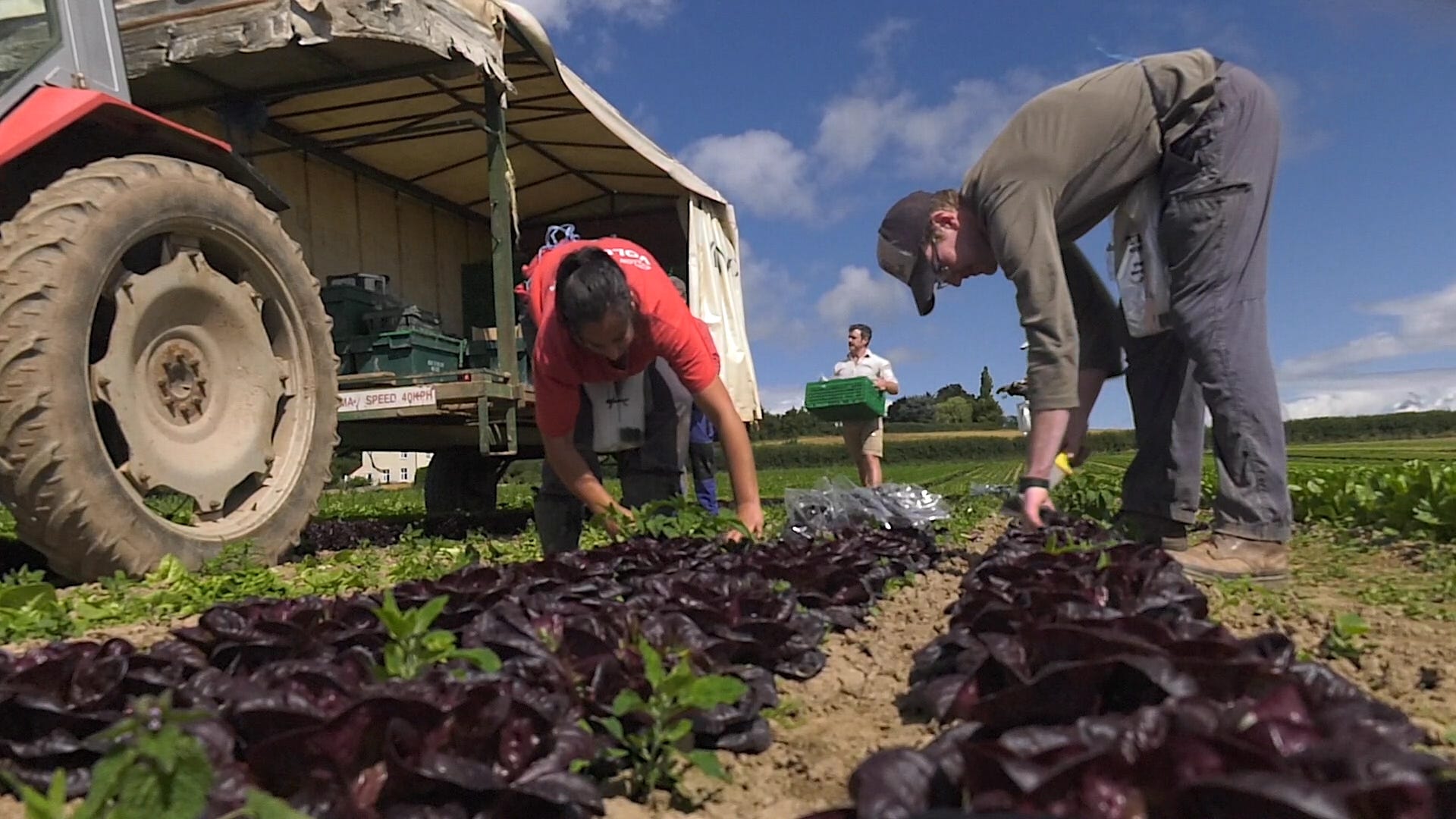
The clearest public example of organic working as a business model is still veg, especially when it is tied to direct to consumer sales, because people can picture what they are buying and they can feel the difference in their weekly shop. A box of vegetables arriving at your door is dinner, and it is also a relationship with a supplier that sits outside the usual supermarket fog.
Recent reporting on Riverford is interesting for that reason. Riverford reported a 6% sales increase to £117m in the year to May 2025, it delivers about 70,000 boxes a week, and Rob Haward, Riverford’s chief executive, described the moment as something the sector has not seen for a long time, saying:
“We haven’t seen the market grow as much as this for 20 years.”
He linked that growth to what he called “increased concerns about where you can go to get food you can trust”.
But the Riverford story is also useful because it refuses to pretend organic is a magic wand. Operating profits fell, and Haward said the company had absorbed some rising costs rather than passing them on, while prices rose by about 3% in the financial year as Riverford and its suppliers battled higher wages, energy costs, and the pressure of Brexit linked paperwork.
So yes, organic can sell, but it does not make you immune to the wider weather, and it leaves a question hanging that matters for the rest of farming. How much of this is replicable without Riverford’s scale, logistics, and decades of brand building, and what happens to the organic premium when household budgets tighten.
Dairy Is Where It Gets Brutal
If veg shows the commercial power of a clear offer, dairy shows the stakes, because the Guardian profile of Mossgiel Organic Farm in Scotland is one of those case studies that makes your stomach drop, simply because it is so recognisable.
“The same month my father died, the milk price collapsed from 27p for every litre we sold to 9p, which resulted in a loss of £100,000 over my first 6-12 months of farming,” Bryce Cunningham said. “With huge debt and no way to repay it, our choices were to sell everything we could and stop farming, effectively just go bankrupt, or try something different.”
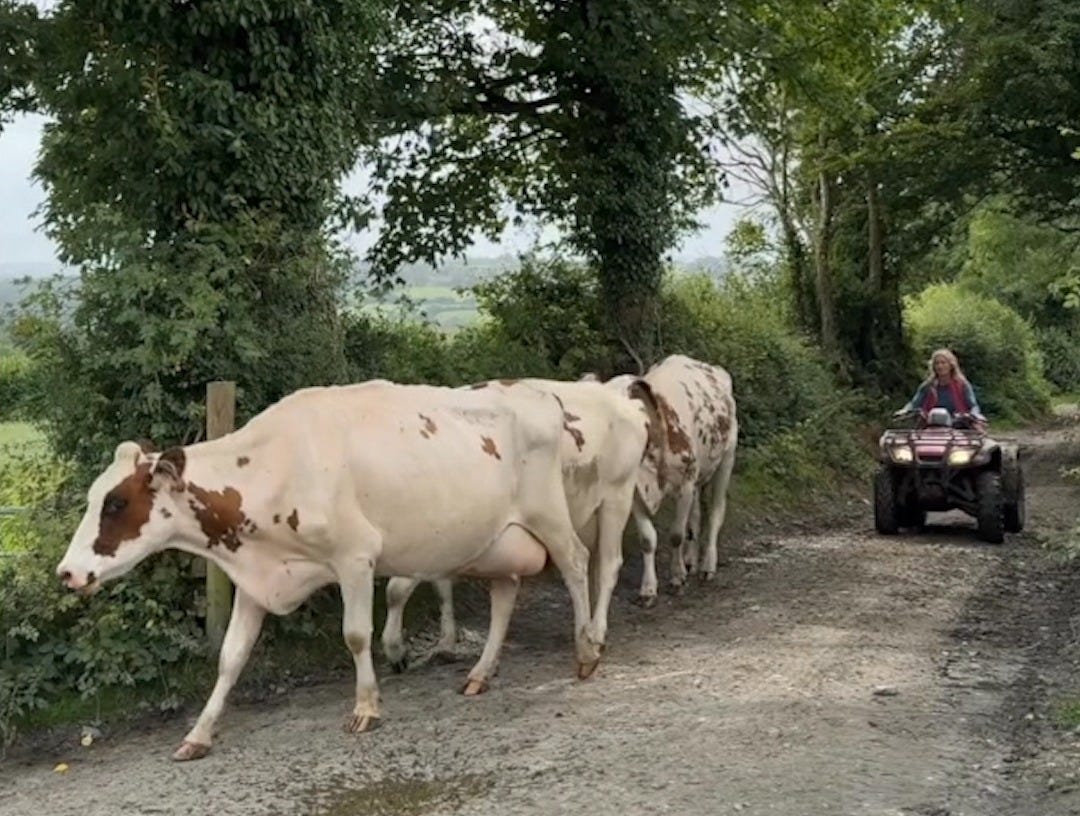
Cunningham decided on the latter, reducing the milking herd and shifting from supplying supermarkets to organic milk production and direct sales, and today Mossgiel Organic Farm employs more than 40 people and processes about 1.5m litres of organic milk a year.
It is also a reminder that this kind of shift takes infrastructure beyond the farm gate, because it takes processing, packaging, energy, brand, and the time and money to build those pieces without collapsing under the day to day realities of farming, which brings you back to the same uncomfortable question as veg. How many farms could do this even if they wanted to, and what would it take to make it possible for more than a handful.
The Bit We Skip Over
This is where the organic conversation often becomes frustrating, because going organic is expensive and the cost lands hardest on small farms, and it is not one cost, it is a pile of them. It is certification fees, inspections, paperwork, the transition period, and the risk of changing systems before you see a return, and it is also the reality that during conversion you can be doing much of the work without yet being paid the premium.
All of that takes time and cashflow that many people simply do not have, and I have seen first hand how quickly a good idea becomes impossible when you are already running on fumes. Plenty of small farms are farming in ways that look and feel organic in practice, but cannot justify the formal badge, and if organic becomes something only the well resourced can afford, it risks turning into a premium label rather than a pathway to better farming and a healthier countryside.
What The Research Says
Sophie Gregory’s Nuffield Scholarship report, What is the future for organic dairy, makes a point that feels obvious once you say it out loud, which is that organic works best when the wider system supports it, meaning processing capacity, strong cooperative models, branding and storytelling that makes the values visible to consumers, and policy stability.
Without those, organic can be financially fragile, especially when consumer spending tightens, and that does not make organic a bad idea, it makes it a systems question.
So Can Organic Actually Help?
I think it could save some farms, and I think it already is, because it is helping some businesses hold onto value, it is giving some farmers a clearer story, it is offering a standard that is harder to hijack than regenerative, and it is often linked to better welfare and lower chemical use.
And if it genuinely helps farmers earn a fairer price, then it is not just a lifestyle choice, it is a survival strategy.
But if the pathway stays expensive and admin heavy, it will remain skewed towards farms with spare capacity, and that means the farms that most need a lifeline will be the least able to reach it.
I am very aware that it is easy to talk about organic as an idea, and much harder to live it as a business decision, especially when you are already stretched and you do not have spare time or spare cash to experiment. If you have ever run the numbers, started the process, walked away from it, or made it work, I would love to hear what you learned, and what you wish the rest of us understood.
If you are not subscribed yet, you can join for free to get the next post in your inbox, because I am planning a follow up on what would make organic more accessible to British farmers, especially smaller farms and tenant farmers. And if you are able to go paid, that is what funds the time it takes to keep doing this properly, reading the reports, chasing the numbers, and turning it into something useful rather than just hot takes.
Either way, if you have lived experience here, please add your voice in the comments. I will read everything, and I may pull together the follow up around what you tell me, alongside the policy and market pieces that shape what is possible.
Sources
The Guardian, “Riverford sales rise 6% as UK organics market enjoys biggest boom in two decades” (3 Feb 2026): https://www.theguardian.com/environment/2026/feb/03/riverford-sales-rise-organics-market-boom
The Guardian, “It was go bankrupt or try something different – how one Scottish farmer is rewriting the rules of dairy farming” (23 Dec 2025): https://www.theguardian.com/scotland-for-the-head-heart-and-the-spirit/2025/dec/23/how-a-scottish-farmer-is-reinventing-dairy-farming
Sophie Gregory, Nuffield Scholarship report, What is the future for organic dairy (2025): https://www.nuffieldscholar.org/reports/gb/2025/what-future-organic-dairy
If just five percent of my readers tipped £1 or $1, this essay would pay for itself in terms of time spent working on it.
My little farm is as organic as you can get but sorry not worth the hassle and expense, the ten or so beef stores I sell a year already get top price in the local market anyway. I don't need someone else telling me how to take care of my farm. That said I certainly support farms joining these schemes, just it's not for me.
Interesting post Helen - as an organic licensee for 20 yrs I must say that I don't think paying £550 a year for my license and inspection is too expensive when compared with other costs. It's scaled according to land and size of business. Everybody goes on about the onerous job of keeping records - again once you know what records are needed, it's straight forward, can be entered straight into apps, and makes you organised and quite frankly they are the type of records that farmers and growers should be keeping so their finger is on the pulse of their business. Like me knowing that my fields are producing more hay than the average ( even with no fertiliser...) and the hay sells for twice that of conventional hay. And I don't use fertilisers, glyphosate or pesticides so my biodiversity is booming