


I am worried about the delivery of this strategy, not the press release version, not the version that reads well in a report, but the version that has to survive the real world. Where welfare is either protected by hard rules and proper enforcement, or it gets traded away, one compromised decision at a time.
I am also tired of the way animal welfare appears in the media, because it is so often framed as a shocking one off, a rare lapse, a single bad farm, a single bad abattoir, a single bad decision! When anyone who has been paying attention knows that these stories keep happening time after time, and far too often the same offenders appear again and again, because the system is built to absorb outrage and carry on.
If we are serious about animal welfare, we have to stop pretending that cruelty is an accident.
In too many parts of modern farming cruelty is a method.
It is baked into systems that prioritise speed, volume, and low cost over the basic needs of living animals.
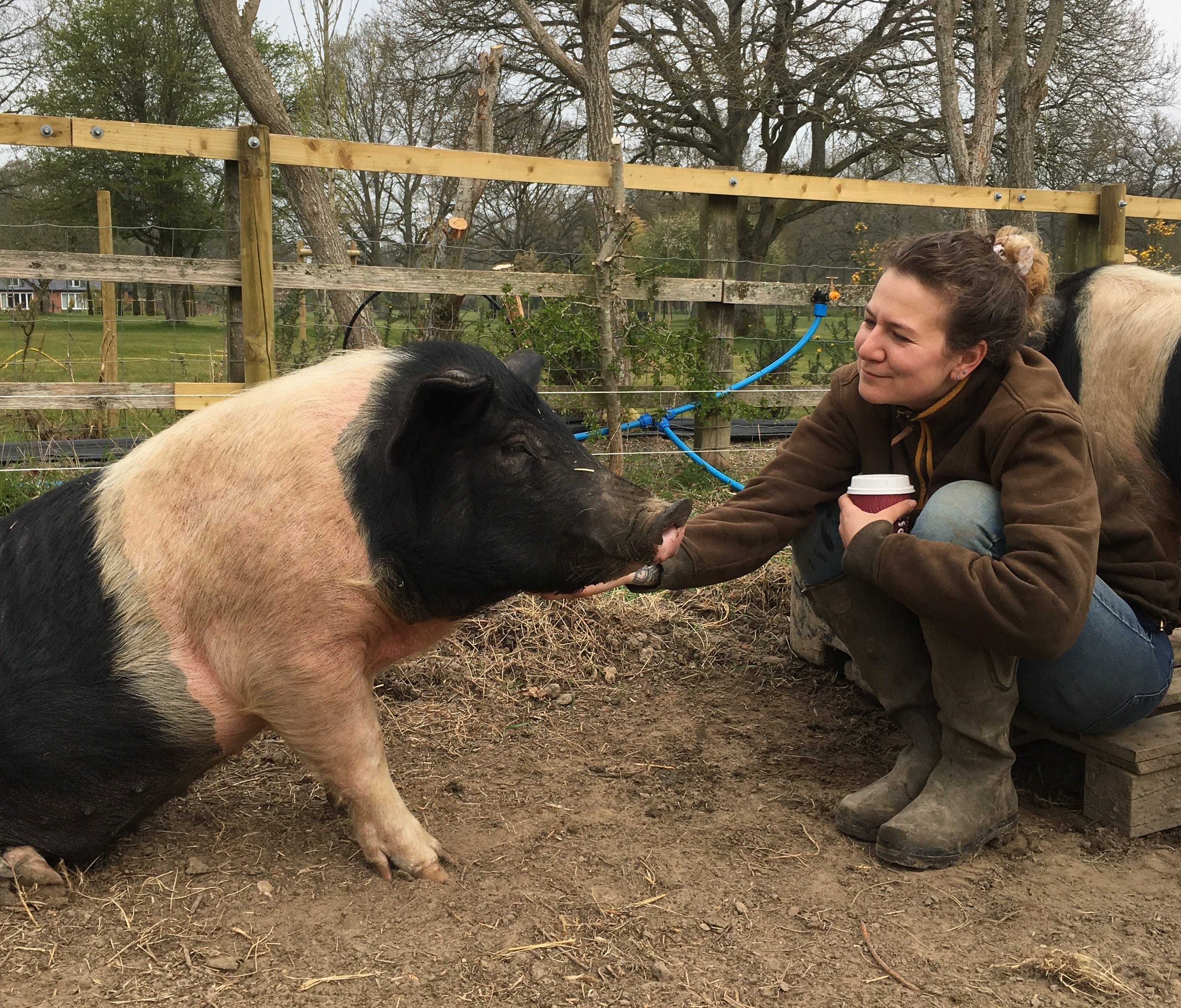
I am passionate about animal welfare in farming because I have lived it, and because I learned as a pig farmer that welfare is not a compromise, it is the quality of life an animal has before death. It is shaped by the choices we make about space, handling, feed, shelter, health, boredom, fear, and whether the animal gets to behave like the animal it is.
There is a moment that stays with me because it captures the difference between a welfare mindset and a control mindset in a way that no policy document ever will.
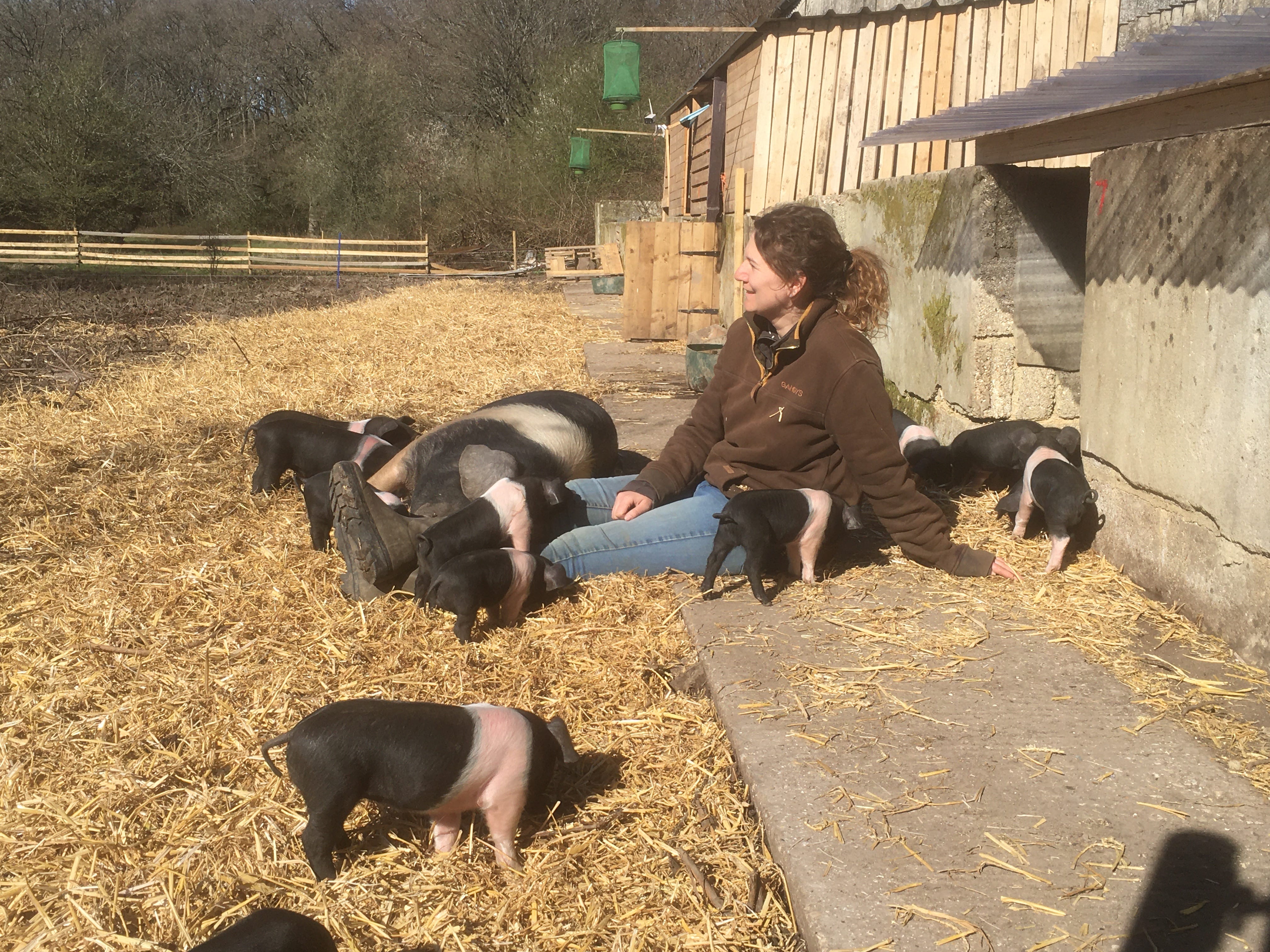
On the rare occasion we needed a vet, one of our pigs, Henry, needed treating, and the vet asked for a crush to restrain him. When I said we did not have one, she defaulted to what she knew, which was chasing him around stressing him out and stressing herself out, turning a simple intervention into a fight.
I protested because it was unnecessary and becoming inhumane for me. I knew Henry and I gave him time out and back scratches, and within minutes he calmed down and lay on the ground grunting happily while I scratched his belly, and at that point the vet could jab him and he did not even notice.
The Vet said she learned a valuable lesson that day, which was to listen to the owners and not just the textbook.
I think about that often, because the lesson is bigger than one pig and one vet, and it is bigger than one farm.
Welfare is not only about the absence of pain in the final moment, it is about the presence of calm, trust, and decent handling across a whole life, and the systems we build either make that possible or they make it impossible.
Yes, higher welfare is often harder work, it is slower, it requires attention, it can mean more labour, more planning, more patience, and more humility. But in my opinion animals are not beneath than us just because we consume them, and if anything they deserve more respect, because they sustain us through nourishment. The least we can do is make sure that the life we take is not a life we have already made miserable.
This is why I cannot look at the Animal Welfare Strategy as a nice to have, because it is not a branding exercise and it is not a cultural signal, it is supposed to be a line in the sand.
And it is why I keep coming back to pigs, because pigs are regularly abused in our current system, and the public is still sold pork under welfare assured labels that are meant to reassure, not to reveal.
If a label can sit on top of a system that normalises confinement, routine mutilations, stress, and fear, then the label is not a protection for animals, it is protection for the market.
This is the tension I cannot ignore.
We need to ban factory farming and the methods that allow cruelty to be treated as normal, which means cage free hens, a ban on farrowing crates, an end to high concentration CO₂ stunning for pigs, and a serious push to stop painful procedures being treated as standard practice.
But if we raise our standards and still allow cheap, substandard imports produced to lower welfare standards to flood the market, we will cripple British farmers who are asked to comply. We will offshore the harm while congratulating ourselves for being decent.
That is not progress. That is displacement.
The strategy sets out big ambitions for England through to 2030, it talks about enforcement, it talks about support, it talks about an integrated systems approach, and I want to believe it. But I have learned the hard way that published is not the same thing as done, and that the gap between those two words is where animals suffer.
This is why the EFRA Committee session at Oxford Real Farming Conference stayed with me, because when the question came about the strategy and the commitments inside it, the response was relief that it is finally out, and then a blunt acknowledgement.
The elephant in the room is the timescales and how we actually get to the ambitions, with a clear warning that DEFRA’s capacity and parliamentary time will decide how much of this ever makes it onto the statute book.
So here is what I am watching, not as a tidy checklist, but as the signals that will tell us whether this strategy is going to change lives, or whether it is going to change language.
I am watching whether cage free and out of crates comes with dates, money, and a plan that farmers can actually live with, because this is where welfare becomes concrete and cost becomes concrete, and without a properly funded transition you do not get better welfare, you get a slow motion crisis where the careful are squeezed out and the careless survive.
I am watching whether trade policy matches the welfare ambition, because this is the make or break point, and I do not mean warm words about not lowering standards, I mean enforceable equivalence that stops low welfare production being imported to undercut higher welfare production, because if we are serious about welfare then we stop importing the opposite and pretending it does not count.
I am watching whether enforcement is treated as central rather than ceremonial, because rules without enforcement are a confidence trick, they create a two tier system where the people who try to do the right thing carry the cost, and the people who cut corners carry on, and the public is left with a story about progress that does not match what is happening on the ground.
I am watching whether pig stunning moves beyond expert concern into actual change, because the strategy itself acknowledges the welfare issues with high concentration CO₂ stunning and points to higher welfare alternatives, and that is one of those moments where we have to decide whether we are going to keep saying we know, or whether we are going to say we will, and then do it.
I am watching whether welfare labelling becomes real enough to reward better farming, because if consumers cannot tell the difference, higher welfare becomes a private cost with no public reward, and we cannot keep asking farmers to carry the burden of public values while the market keeps paying them as if those values do not exist.
I am watching whether the strategy tackles the wider direction of travel on intensification, because you can improve welfare at the margins while still building a system that concentrates animals, concentrates risk, and concentrates harm, and if we do not name that trade off honestly then welfare policy becomes a fig leaf for more of the same.
If this strategy is going to deliver welfare gains without hollowing out British farming, a few things need to be true at the same time.
Welfare uplift has to be matched by trade policy that prevents undercutting.
Transition has to be funded and practical rather than aspirational.
Enforcement has to be resourced rather than outsourced to the conscience of the sector.
And the market has to be made to reward better outcomes rather than simply demanding them while shopping for the cheapest version.
I want this strategy to work.
I want fewer animals living in systems that rely on confinement and routine harm.
But I also want us to stop pretending that welfare can be improved in isolation from trade, from power in the supply chain, and from the basic question of whether the people producing our food can survive under the rules we set.
If we do not line those pieces up, we will not get higher welfare.
We will get higher standards on paper and lower standards imported in practice.
If just five percent of my readers tipped £1 or $1, this essay would pay for itself in terms of time spent working on it.
Your words really resonated with me. Thank you for sharing. I too agree. The real change must come from policy changes that are not lost in translation.
Thank you so much for sharing this! I agree with you 100% that the system needs to enforce change but also ensure that they are rewarding farmers for aligning with these welfare improvements and by importing and selling poorer welfate products it completely negates everything.
The welfare labelling system definitely needs more awareness as many people I know are so unaware about what it actually means. There can also be so much welfare washing which leads consumers to think they're choosing well.
I loved your anecdote about the vet and your pig! Working with compassion and patience is so important and shockingly often not the default setting of many people even with the animal care system. Most of my work actually involves working with exotic animals and training them to voluntarily participate through positive reinforcement in their own medical care and honestly, it's just so rewarding. Yes it takes time to invest in building relationships and getting to know what the animal enjoys or is motivated by; BUT to be able to carry out these procedures with minimal stress and often some aspect cognitive enrichment during the learning process! Nicer for the animals AND for the vets & care takers!