

The ORFC 2026 Moments Everyone Will Be Arguing About
Glyphosate, plant based food, policy reality, and the conversations that felt quietly important

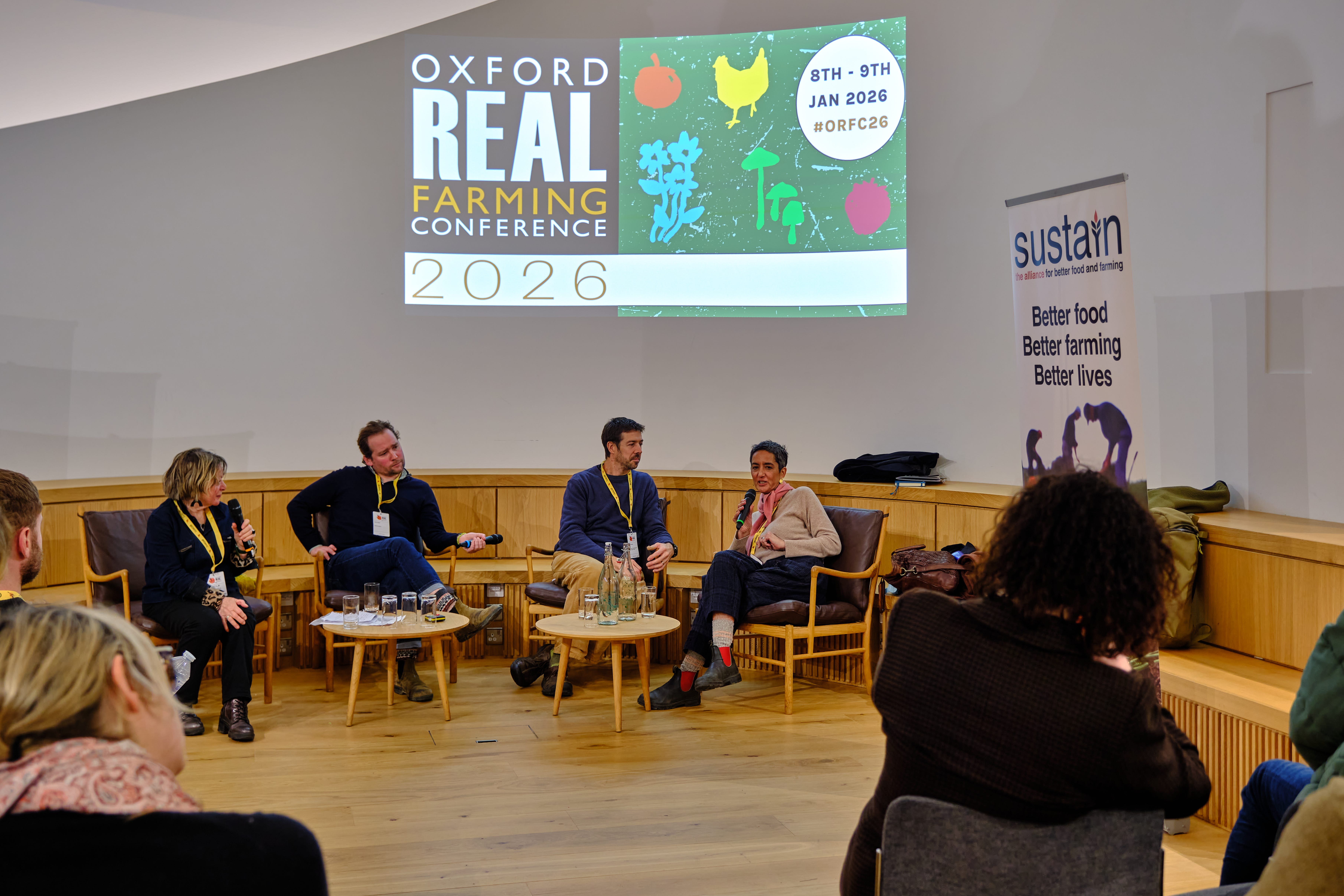
I watched Oxford Real Farming Conference (ORFC) 2026 online this year. I am grateful it exists in this format because it meant I could still be part of the conversation, even with family life, time zones, and the reality that comes with that.
But I want to be honest about what I missed, because it matters.
The biggest thing I did not get from attending online this year was the inspiration.
There is a real lift that comes from being at ORFC in person. You leave with that slightly fizzing feeling that better farming is possible, and that you are not trying to figure it all out on your own. I missed that buzz this time.
If you are a farmer, thinking about farming, or brand new to the industry, I would genuinely recommend going in person if you can. It is full of good ideas, good people, hard hitting topics, and proper farm case studies, not just theory.
If you cannot make it, the online version is still excellent. But next year I am not missing it in person. And who knows, maybe I will dig deep and apply to be a speaker. Watch this space!
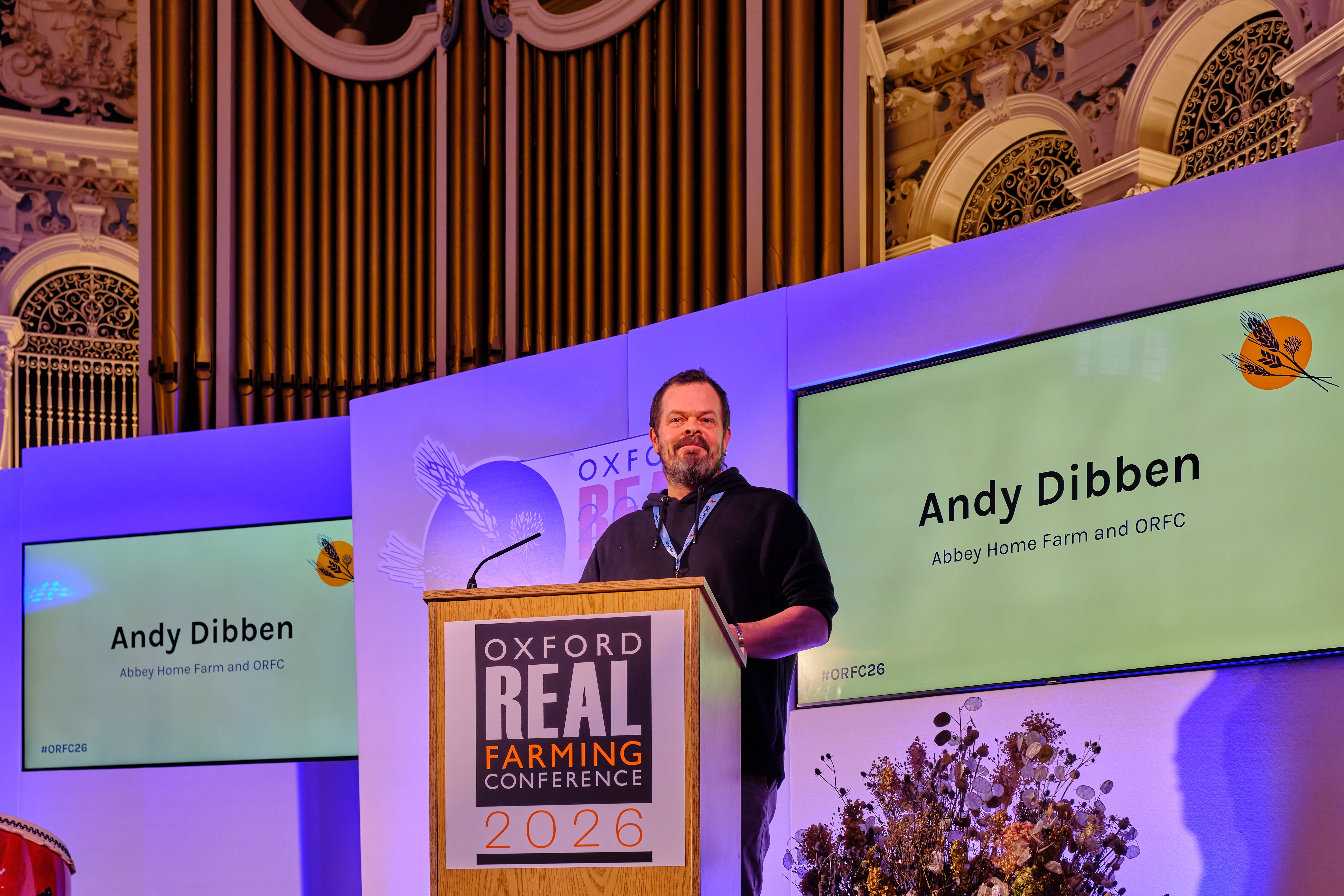
Andy Dibben opened the conference with a remark that I have not been able to shake. It set the tone, and it also explained why ORFC matters to so many people.
“In the 12 months since we last gathered here, we’ve experienced the sunniest and warmest year since UK records began. Global politics continues to fragment and become more volatile. Fascism, open corruption, and oppression seem to be on the rise. Destruction of natural ecosystems accelerates despite the increase in the in awareness of its importance.
One thing is clear. To address these challenges, we cannot rely on our political leaders. The change will come from the bottom up. We, the people, need to build a new society and leave the billionaires to wither on the vine in their high castles.
Without us, the people, they will become irrelevant.”
I do not share this to be dramatic. I share it because it captures the mood I usually feel in the room at ORFC, and it is exactly the thing I missed by not being there in person.
ORFC vs OFC
There are two big conferences in Oxford, UK every January.
There is the Oxford Farming Conference (OFC), where DEFRA (The Department of Environment, Food & Rural Affairs) made new announcements about the Sustainable Farming Incentive (SFI) subsidy reopening this year. A report summary is coming soon because I want to read the details properly. Often when the government says one thing, they mean another. You have to read between the lines and see what it actually means for farmers, not spreadsheet thinkers.
Then there is the Oxford Real Farming Conference, an agroecology focused conference with well over 150 sessions. ORFC has always been the place to share progressive ideas. Subjects include agroecology, regenerative agriculture, organic farming and indigenous food and farming systems.
They are very different conferences. Sometimes they feel like polar opposites to me. But what I think we need most is a bridge between the two.
Farming is not one size fits all. All farmers are feeling the pain of our broken food system, but we cannot keep designing policy changes that only support one kind of farming while expecting everyone else to adapt.
That is also why I welcomed seeing the EFRA Committee Q&A at ORFC this year. It felt like a small but important step towards having harder conversations in the same room.
My top sessions from the online programme
I missed plenty, and I know I will have missed some of the biggest conversations happening in corridors and side rooms. I did not get to sit in on new abattoir solutions, meet up properly with the emergent generation, catch up with food writers I admire, or even pop down to the Oxford Farming Conference, which I was invited to at the last minute.
Still, these are the sessions that stayed with me:
Soil to Pub
This one surprised me. I jumped in last minute and ended up loving it, partly because it got practical about what makes farmer and hospitality relationships actually work. It was a reminder that the route to market is not just logistics, it is trust, communication, and shared values.
Watch it here:
Resistance And Renewal: A Debate On Glyphosate
This was one of those sessions that makes you sit up straighter. It was a proper debate, not a slogan contest.
One uncomfortable point that stayed with me was this. If we ban glyphosate, another pesticide will be released with two molecules different, with less testing, fewer trials, and potentially worse impacts. So if we are going to call for bans, we need to be honest about what we are actually asking for. It cannot just be one chemical. It has to be the whole pesticide system.
Watch it here:
EFRA Committee Q&A
This was one of the most useful sessions I watched because the value was in the audience questions, not the panel s opening remarks.
The animal welfare section was the bit I paid closest attention to because of the newly released Animal Welfare Strategy. They sounded genuinely relieved the strategy is finally out, but they were also blunt that the timescales and delivery are the real test, and that DEFRA’s capacity and parliamentary time will decide what actually makes it onto the statute book.
It was a good reminder that published is not the same thing as done. I have scepticism about DEFRA delivering the Animal Welfare Strategy, and this session added even more questions to my mind. A deeper dive is coming soon.
Watch it here:
The Demise of Plant-Based Foods
This one landed because it connects directly to the conversations that blew up after my Veganuary posts, especially the climate logic of flying produce around the world while calling it better.
A big thread here was the problem with a lot of modern plant based food being ultra processed, full of preservatives and synthetic ingredients, and marketed as a moral upgrade.
What I did agree with, strongly, was the push back towards real produce as the actual plant based alternative. Food grown in soil, eaten seasonally, and treated like food rather than a branded identity.
Where I felt a bit of friction was the default leap to therefore we must eat less meat. I do not think the answer is blanket meat reduction. I think it is less bad meat and more good meat.
Factory farming is catastrophic for animal welfare, human health, nature, and the wider environment. If we cannot support higher welfare meat because of the price point, then we should not be eating meat.
At the same time, I do understand the bridge that has to be built. We are not going to feed the whole country high welfare, organic, agroecology meat at the current rate of consumption without serious system change. So yes, I understand the argument that if you cannot afford better meat all the time, eat less, even if I am not willing to turn that into a moral instruction for everyone.
Watch it here:
Three Themes I Kept Hearing
Even through a laptop screen, a few threads kept repeating.
First, the gap between policy and reality. Strategies, roadmaps, and announcements matter, but delivery is where trust is won or lost.
Second, the food system is broken in ways that hurt everyone. Farmers, consumers, animals, and ecosystems are all paying the price for cheapness.
Third, there is a hunger for practical bridges. Bridges between farmers and chefs, between soil and public health, between agroecology and mainstream policy spaces, and between the two Oxford conferences.
If you have been reading for a while and my work has helped you think, feel, or argue more clearly about farming and food, the best thing you can do is comment on this post.
Tell me what you watched, what you disagreed with, and what you want me to unpack next.
And if you are one of the people who already supports this work as a paid subscriber, thank you. It makes a bigger difference than I can properly explain.
"... if you cannot afford better meat all the time, eat less...." is exactly the approach my partner and I take. I can't bear the thought of funding the factory farming of animals. We buy British grown organic meat online at the moment, and stick it in the freezer to have a couple of times a week.
Thank you for your summary especially as I am still yet to finish watching sessions.
Isn't the same message always put across? That it's time for change, and change will come from a grassroots level?
Geetie and Peter are excellent ambassadors for showcasing what is possible, what can be achieved.
Your note about gysophates is sobering and well made. A ban isn't always a total solution.