


Over breakfast this week I ended up in one of those arguments that is not really about politics, even when it sounds like it is. It was about the cost of living, and the feeling that everything essential is getting more expensive at once, electricity, fuel, water, and heating, and that when those bills go through the roof, food becomes the thing people try to squeeze because it is the only line in the budget that still feels adjustable.
That is how you end up with a country where people talk about “affordable food” as if it is a moral good, even when the people producing it are barely breaking even.
A reader, Reneé Davis, put the same back to front feeling into words more clearly than I could.
“It’s all just so back to front. Trouble is too many people will still dismiss local, seasonal and British food because they’ve put it all in the category of ‘too expensive’. I’ve been prioritising food-as-medicine since 2007. Even when my husband and I had hardly any money, I’m talking pennies left at the end of the month, food was the number one thing we spent our money on. British, seasonal and as local as possible will top any faddy diet or trend. I was having a conversation just Thursday with a person who is ‘doing keto with just fish and eggs, because free range, farm reared meat is unaffordable’.”
I keep coming back to that because it captures the logic we have normalised. Cheap food is treated as sensible. Real food is treated as a luxury. The price on the shelf is treated as the whole truth, even when it is only one part of the bill.

This is also a follow up to my earlier post about British branding in supermarkets, The Store feels British, The supply chain is Global. I keep circling the same problem from different angles, because it shows up everywhere. The story we are sold at the shelf, the flags, the “supporting British farmers” banners, the bargain prices, often has very little to do with what is actually happening in the supply chain, or with who is carrying the risk and the cost.
The shelf price is not the full price
When people say “cheap food isn’t cheap”, it can sound like a slogan. What it really means is simpler, and more uncomfortable. The bill still gets paid, but it is often paid somewhere else, by someone else, later.
Sometimes it is paid by farmers, through prices that do not cover costs, contracts that shift risk down the chain, and specifications that can change at the last minute. Sometimes it is paid by workers in processing and logistics, through speed, low wages, and insecure work that keeps the system moving while staying invisible to the shopper.
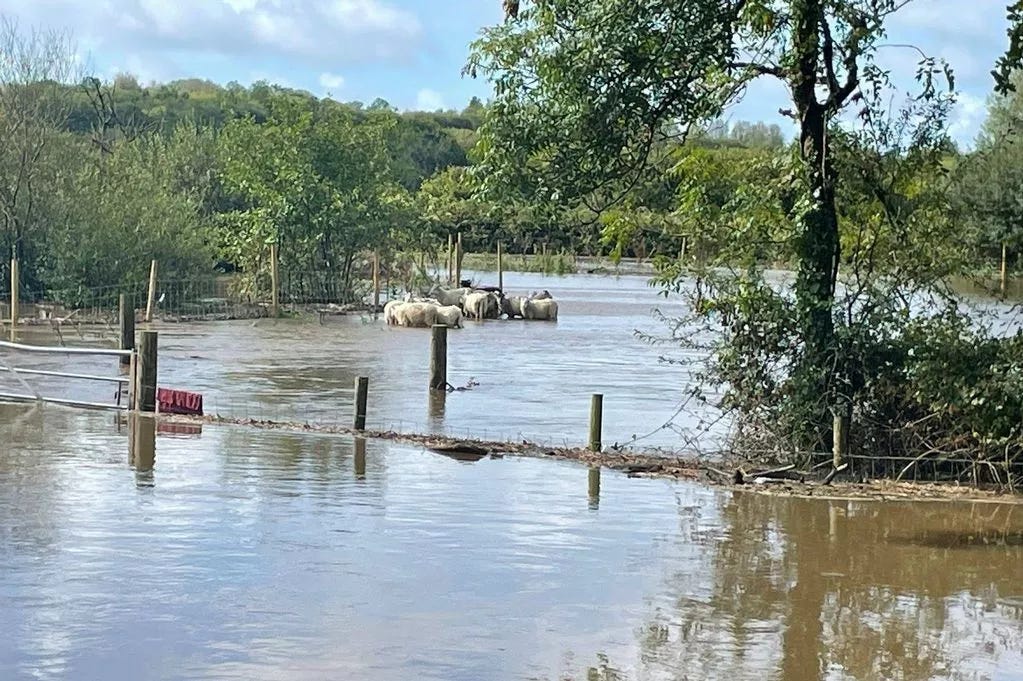
Sometimes it is paid by the countryside, through soil loss, water pollution, biodiversity decline, and flood risk that communities live with long after the bargain has been forgotten.
Sometimes it is also paid by the public, through taxes and water bills, through health costs, and through the slow repair work that follows when a system is built to prioritise volume and cheapness over resilience.
One way I often put it is this. For every pound a UK consumer spends at the checkout, they spend another pound repairing damage caused by an industrial food system. You can argue about the exact ratio, but the direction of travel is hard to deny. The price on the shelf is not the price of the system.
And sometimes it is paid by households in ways we do not label as “food costs” at all, through diet related ill health, stress, and the constant mental load of trying to feed a family well inside a system designed to make the cheapest options the easiest options.
None of this is a moral lecture aimed at people who are stretched. It is an argument about how the system is designed, and about what we are quietly accepting when we treat low prices as the only definition of success.
How cheap gets made
A supermarket can sell you a chicken for a few pounds, or vegetables for pennies, because it has power. It has scale, it has leverage, and it can decide where the pressure lands.
If you are the farmer, you cannot usually pass your costs on. Feed, fertiliser, fuel, labour, packaging, compliance, insurance, interest, and the weather all move, but the price you are offered often does not move with them. If you are told the price is the price, you either accept it or you lose the contract, and the supermarket can replace you with another supplier, or another country, or another product line.
This is where the cost of living squeeze matters twice over. When energy and essentials rise, households have less room to move, and food becomes the adjustable line. At the same time, farms and processors are paying more for fuel, fertiliser, heating, cold storage, and transport, which pushes costs up inside the supply chain just as the public is being asked to accept that food should stay cheap.
That is why “too expensive” is not just a description, it is a category we have been trained into. It is the category that keeps the shelf price low by making anything that reflects real costs feel unreasonable.
The displaced cost, in three places you can actually see
First, the cost is displaced onto farmers and rural communities. When the price does not cover costs, farms do not simply tighten their belts forever. They cut corners where they can, they stop investing, they take on more debt, they burn out, or they leave.
When farms go, they do not reappear on demand, and with them skills disappear and local processing disappears. The quiet infrastructure that keeps food moving, butchers, hauliers, abattoirs, machinery rings, seasonal labour networks, starts to thin out.
This is also why small scale, organic, and regenerative food can look “expensive” in the supermarket comparison, even when it is barely making a profit. The higher price is not always a luxury margin. Often it is simply the real cost showing through, because the producer is trying to pay wages, build soil, meet welfare standards, and stay in business without pushing the bill onto someone else.
Second, the cost is displaced onto the countryside itself. A system that pays badly does not create the conditions for good land management. It creates the conditions for short term thinking, because you cannot plan for ten years when you are trying to survive the next season.
That is how you end up with soil treated as a medium to mine rather than a living asset to build, and with nature treated as an optional extra rather than the foundation of long term productivity.
Third, the cost is displaced onto households, but not always at the till. When budgets are tight, people are pushed towards the cheapest calories, the most convenient options, and the most aggressively marketed “solutions”. That is not a failure of willpower. It is what happens when the food environment is designed to make ultra processed food feel normal, and when time, energy, and cooking facilities are unevenly distributed across society.
This is where Renee’s example lands. Someone doing keto on fish and eggs because free range meat is “unaffordable” is not a punchline. It is a sign that we have lost the plot on what food costs, and what it is for.
We have made real, properly produced food feel like a luxury, while treating restrictive diet strategies as practical, even when they rely on supply chains that are often more fragile, and more expensive than people expect once they add it up.
This is not about shopping perfectly
I do not think the answer is to tell people to shop perfectly, or to pretend everyone can buy direct, or to turn food into a purity test. Most people cannot buy direct for everything. Many people are feeding children, managing health issues, juggling work, and doing their best.
This is not an ethics post. It is an essay about displaced cost, and about the lie we are asked to live inside when the shelf price is treated as the whole story.
The small ask is not that you change everything overnight. It is that you see what is happening, and that you make one small change within your means, because small changes multiplied across thousands of households are how local food economies stay alive.
It also means we stop letting “supporting British farmers” be something supermarkets claim in banners while pushing the real costs down the chain.
What helps, without asking for perfection
If you want to push back against displaced costs, there are a few things that genuinely help.
Buy British, seasonal, and local when you can, and treat seasonality as an honest signal rather than an inconvenience.
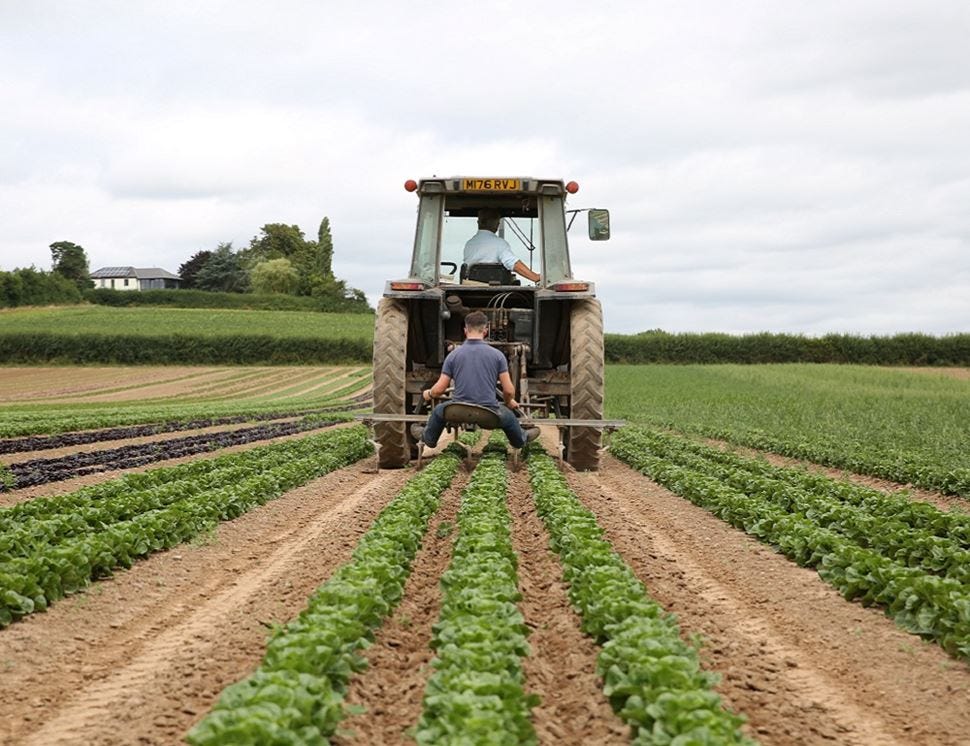
Buy direct sometimes, not for everything, but as a deliberate choice to put money into the part of the chain that actually produces the food.
Pay attention to labels and origin statements more than banners and mood marketing.
Ask better questions of big retailers, not just “is it British”, but what percentage of a category is British, how risk is shared when a crop fails, and what happens when suppliers speak up.
If you want a few questions you can actually use, here are four that cut through the mood marketing without turning you into a detective in the aisle.
What percentage of this category is British in season and out of season. What happens when weather wipes out a crop, and who carries the loss. Are suppliers on fixed contracts, or exposed to spot pricing and last minute changes. What happens to rejected loads, and who pays for the waste.
And if we are serious about UK food security, we should be able to say this out loud. Food security is not just full shelves today. It is land in production, skills, processing capacity, storage, and enough redundancy in the system that we are not one shock away from panic.
Food is essential. We already accept, in other parts of life, that governments intervene to keep essentials within reach. The question is whether we want a food system that keeps the shelf price down by making farmers disposable, or one that keeps food within reach by paying fairly for the work and building resilience into the chain.
A small ask
If this essay helped you see how “too expensive” became a category rather than a calculation, please consider subscribing.
Free subscribers keep the conversation going, and they help this kind of writing reach people who care about UK farming, rural communities, and food security, even if they have never had to produce the food themselves.
Paid subscribers fund the time it takes to do this properly, to follow the claims back to the sourcing, the incentives, and the outcomes, and to keep making the case for a UK food system that does not treat farmers as disposable.
If you are able to upgrade, thank you. It is one of the most direct ways you can support independent work that is trying to support British farming, without pretending a Union flag in an aisle is the same thing as a fair deal.
If just 5% of my readers tipped £1/$1 this essay would pay for itself in terms of time spent working on it.
Thought-provoking as always, Helen. And one of those thoughts is:
What's the best way to get from where we are to where we could or should be?
A total free-market approach? If not, how much?
A total state-led approach? If not, how much?
Adopt what works best elsewhere? If so, where?
My own view, for what it's worth, is that nothing much good will happen without a serious intervention by some sort of state-farm-retail coalition, one that ties everything you refer to here into a cohesive whole.
Because it's blatantly clear that allowing the market to dictate the rules has got us into this situation, while expecting a government to manage the process has inefficiency and failure written all over it.
I have no idea what the ultimate answer is, or the actual process (that's way above my pay grade), but working backwards from an ideal state appears to broadly support this concept.
Is there a real-world scenario somewhere out there that needs serious consideration?
We have a weekly delivery of a veg box from our local organic farm. I love the element of surprise and it saves us money and waste because:
A) We don’t have the expense or carbon cost of driving to a supermarket. (I gave up supermarkets for lent several years ago and have never looked back)
B) Not going to a supermarket means I don’t end up buying a load of stuff I don’t need because it’s on special offer or I fancy it. This improves our diet and reduces waste. If I require something I pop down to our local village shop which has everything I need (even tahini and organic sourdough bread) without bombarding me with masses of stuff I don’t. And there’s only so much you can fit in bike panniers.
C) On the odd occasions I do end up in a supermarket I am horrified by how much plastic everything is wrapped in.
I should add that we are on a low wage and I believe that living like this is cheaper. But as a regenerative farmer’s daughter I guess I already have the mindset.