

This Is A Policy Choice About Which Farms Count
This is how you lose local veg, local jobs, and nature friendly farming, quietly, in the fine print

The Story You Are Being Sold
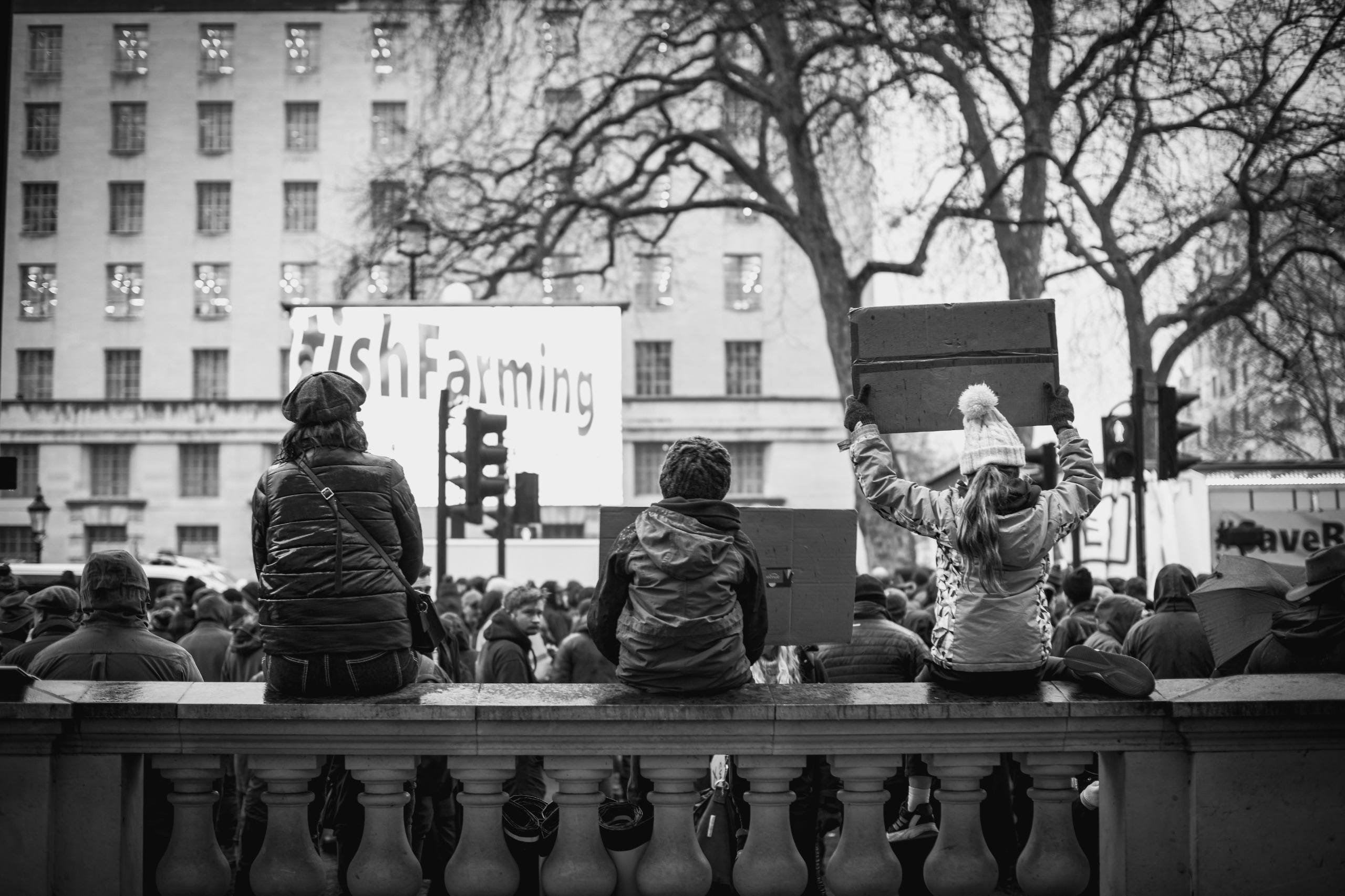
If you have been watching the UK news, you might have seen the protests and assumed this is mainly about inheritance tax. That is part of it.
Farmers have been protesting the inheritance tax changes, and many are still protesting even after the small adjustments that were meant to calm things down. But there has been another blow since then.
A few weeks ago, Defra published the latest update to the Sustainable Farming Incentive, the main scheme in England that is meant to pay farmers for environmental work.
This is where the news coverage often falls short. It tends to flatten everything into one story, as if all farms are the same and all farmers are angry for the same reasons.
They are not. These changes affect all farmers, but not equally.
Not all farming systems are treated equally by policy, and the most damaging effects fall mainly on smaller scale, high welfare, agroecological, nature friendly farms. That matters for consumers, because these are often the farms trying to produce food in ways that protect soils, wildlife, water, and animal welfare.
The Simple Version
In England, the main post Brexit farm payment scheme is the Sustainable Farming Incentive, or SFI.
Defra has just announced a new version for 2026, and it is being sold as a reset after last year’s chaos.
But the loudest signal in the fine print is that government is trying to control the budget by controlling who gets through the door.
There is a priority application window for smaller farms, and the biggest claims will be capped. At the same time, farms and growers under 3 hectares are excluded entirely.
That is not a technical tweak. It is a policy choice about which kinds of farming count.
What SFI Is Meant To Do
SFI is a government payment scheme in England that pays farmers to do specific environmental actions on their land.
In theory, it is a simple trade. Government sets out a list of actions it wants, farmers choose what fits their system, and payments help cover the cost of doing that work.
The actions are meant to deliver public goods, things like healthier soils, more wildlife, cleaner rivers, and lower chemical use.
The problem is not the idea. The problem is that the scheme keeps changing while farm businesses are expected to make multi year decisions, and that the rules increasingly favour the farms with the most land and the most admin capacity.
What Changed, And Who Gets Shut Out
Here are the main updates:
The new offer will have 71 actions, down from 102. There will be two application windows, June 2026 for smaller farms (defined as 3 to 50 hectares) and for those not currently in a live ELM revenue agreement, and September 2026 for everyone else.
Total agreement value will be capped at £100,000 per year. Some arable payment rates will be reduced.
Moorland actions will see increased payment rates, and the uplift will apply to existing agreements that already include those actions.
A minimum 3 hectare eligibility threshold has been reintroduced, which means farms and growers operating on fewer than 3 hectares will be excluded.
Why 3 Hectares Is Not “Small” In The Real World
If you have never farmed, 3 hectares might sound tiny, and it is.
But it is also big enough to include a lot of serious small farms, and big enough to exclude a lot of market gardens, community supported agriculture farms, and small mixed holdings.
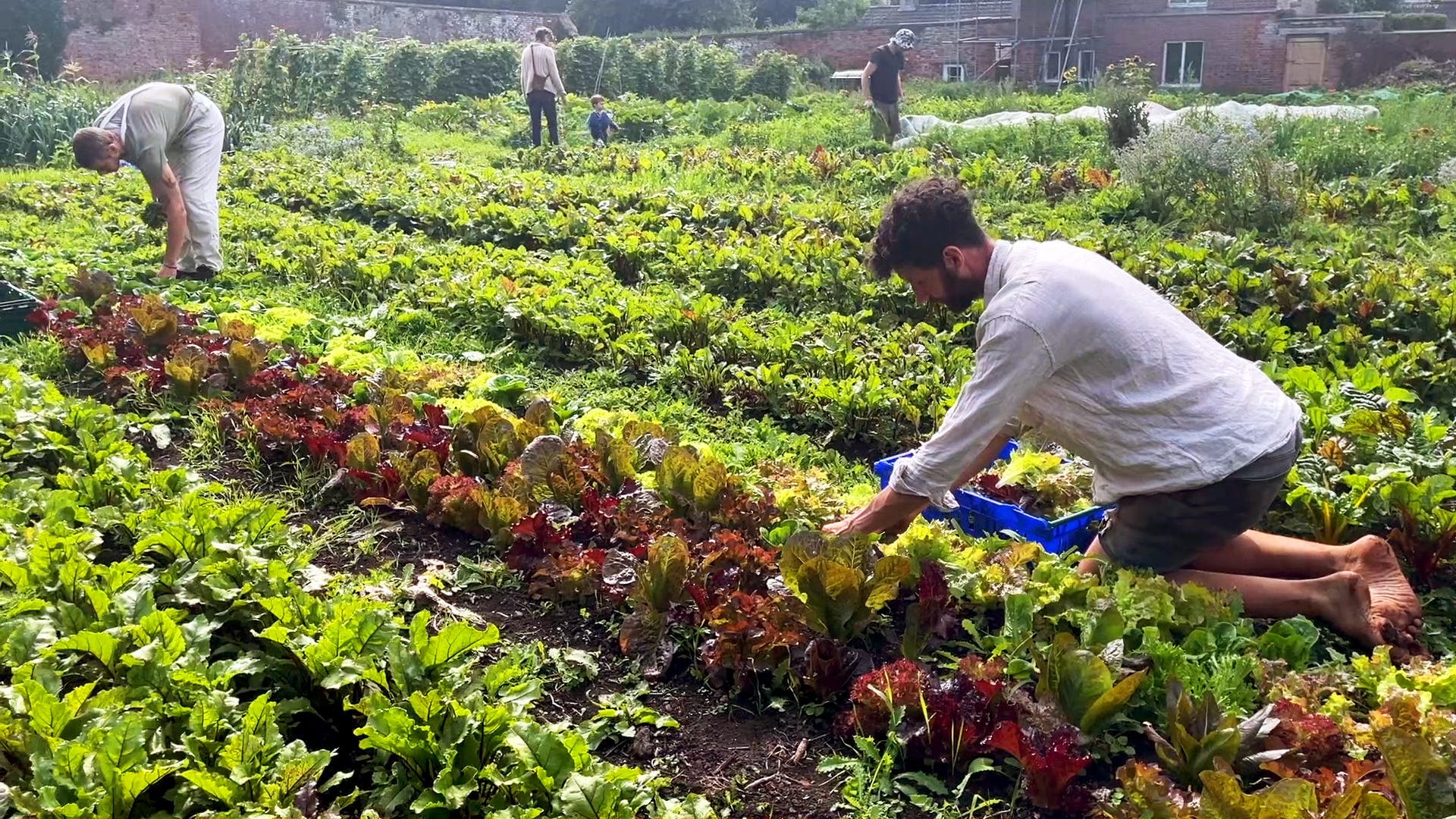
These are often the farms that grow vegetables, employ local people, raise high welfare livestock, and sell direct to the public. They are also the farms that tend to deliver the kind of environmental outcomes the scheme claims to want.
So when government excludes them, it sends a message that small scale food production is not worth the paperwork.
That is why people are angry, because it suggests the system is being designed around what is easiest to administer, not what is most valuable for food resilience.
The Trust Problem
Farmers are being asked to make multi year decisions about rotations, stocking, tenancies, and investment. But the scheme keeps changing.
Last year, SFI was suddenly closed when many people were still preparing applications. Now Defra is trying to prevent another sudden closure by using application windows.
That might help, but it does not guarantee funding. Some groups are warning that the scheme still creates jeopardy because it remains first come, first served.
There is also a very practical issue. The current SFI IT system cannot accept an SFI26 application on land that is still under an active agreement, which can create gaps in income and environmental delivery for farms whose existing agreements expire out of sync with the new windows.
If you are a consumer, here is the translation:
You cannot build a stable food system on a scheme that feels like a scramble for a limited pot.
Helen’s Perspective
I want to say this plainly.
SFI 2026 is being presented as a reset, but it reads more like a rationing system. The application windows, the £100,000 cap, and the reduced action list are not neutral design choices. They are Defra trying to control a budget by controlling access.
Some of that is defensible. A cap and a staged window could stop the biggest businesses hoovering up the money, and it could give smaller farms a fairer shot.
But the below 3 hectare threshold is not a tidy administrative tweak. It is a decision about who counts, and it tells the most intensive, high labour, high value growers in England that they are not worth the paperwork.
That is the part that should worry everyone, even if you are nowhere near 3 hectares.
Because once you accept that small farms are an administrative inconvenience, it becomes easier to accept that tenants are too complicated, that commons are too messy, and that mixed systems are too hard to audit. The scheme drifts toward what is easiest to measure, not what is most valuable to food resilience, nature, or rural jobs.
The other signal in this update is that Defra still has not fixed the trust problem. The CLA is not warning about ideology. They are warning about jeopardy.
First come, first served funding, an IT system that cannot handle transitions cleanly, and agreements expiring out of sync with application windows create the same cliff edge dynamics that caused last year’s chaos. You cannot ask farmers to plan multi year rotations and stocking decisions while the scheme behaves like a flash sale.
The Transition Bottleneck This Creates
There is another piece of this that is not being said out loud.
If you want conventional farming to transition toward agroecology, regenerative practice, or organic, you have to make the bridge crossable. These transitions are hard. They are agronomic, financial, and emotional. They often mean a dip in yield, a learning curve, new kit, new rotations, and a period where you are carrying more risk for less certainty.
We are starting to see real signs of profitability for farms that make that shift well, especially where nature friendly practice is paired with a stronger route to market. More farmers are selling locally and direct to the public, building farm shops, box schemes, CSAs, and local supply chains that keep more value on farm.
That matters because nature friendly food does not fit neatly into the supermarket model. Supermarkets rely on uniformity, volume, and tight margins. Diverse, seasonal, regionally distinctive production is harder for them to buy, and it is harder for them to control.
So when policy churn makes farm businesses more fragile, it does not just slow down environmental delivery. It slows down the transition itself. It keeps farmers locked into the systems they already have, because only the most risk tolerant can afford to change.
And when eligibility is based on hectares and admin capacity, the farms most likely to build local markets and diverse systems are often the ones pushed out first.
A stronger local food economy is one of the few routes that reduces reliance on subsidies over time, because it improves farm margins without asking the Treasury for another cheque. If Defra is serious about resilience, it cannot keep squeezing farmers with one hand while calling it simplification with the other.
It has to make the path to transition clearer, steadier, and genuinely accessible, including for the smallest growers and the most complex mixed and tenanted farms.
How This Becomes A Culture War
When people are under pressure, they look for someone to blame.
Consumers get told farmers are greedy.
Farmers get told consumers do not care.
And campaign groups sometimes frame it as if the only moral choice is to stop eating meat or stop farming livestock.
But most farmers are not asking for sympathy. They are asking for a system that does not push risk down the chain and then act surprised when businesses collapse.
What You Can Do
If you want to understand the anger, start here.
Farmers are being asked to deliver environmental work while absorbing more risk and more admin, at the same time as the market still rewards cheap food produced at scale.
And the policy system keeps changing.
That combination makes people feel trapped.
If you want to support better farming without turning it into a lifestyle performance, start small. Buy one thing direct now and then, pay attention to seasonality, and support local veg growers, not just artisan brands.
And when you see farmers protesting, do not assume it is just nostalgia for subsidies.
A lot of it is fear.
Fear that the transition is being designed for the businesses that already have scale, land, and admin capacity.
If You Are A Small Scale Farmer Outside The UK
You might be reading this and thinking this sounds familiar.
That is because it is.
Across many countries, the pattern is the same. Policy is written for what is easiest to measure, payments and grants are designed around acreage, and admin systems assume you have time, staff, and stable land tenure.
Small farms are told they matter, and then excluded in practice.
If you want one takeaway, it is this.
Do not let this become a fight between farmers and consumers.
Aim your attention at the design. Ask who the rules are built for, who gets excluded, and who absorbs the risk.
Sources
SFI26: details, definitions and what to expect - Department of Environment, Farming & Rural Affairs
SFI26 Update - Game & Wildlife Conservation Trust
SFI 2026 Update: It’s time to mobilise for below 3ha farms - Landworkers’ Alliance
Small farms excluded from vital farm payment scheme - Community Supported Agriculture UK (CSA UK)
SFI and Defra grants under the microscope: what do the latest updates mean for you? - Country Land and Business Association (CLA)
NFU26: Defra Secretary’s reformed SFI ‘strikes the right balance’ - National Farmers Union (NFU)
DEFRA are not the farmer's friend. Systems clearly designed by people who have absolutely zero understanding of farming and the long lead times required.
Much the same in Wales with the 3Ha ruling or if you can prove 550 manhours labor. It's not going down well with the farming community so far. WAG are in my opinion just a bunch of technocratic micro- managers. Too many sat behind desks making decisions that don't have any impact on them personally but have far reaching consequences that reach down all the way to the sleepless nights for the small farmer.