

This Is What Food Insecurity Looks Like At The Start, As Britain Burns.
Wildfires, heatwaves and drought don’t empty shelves overnight. They squeeze supply, raise costs, and push risk onto farmers first.

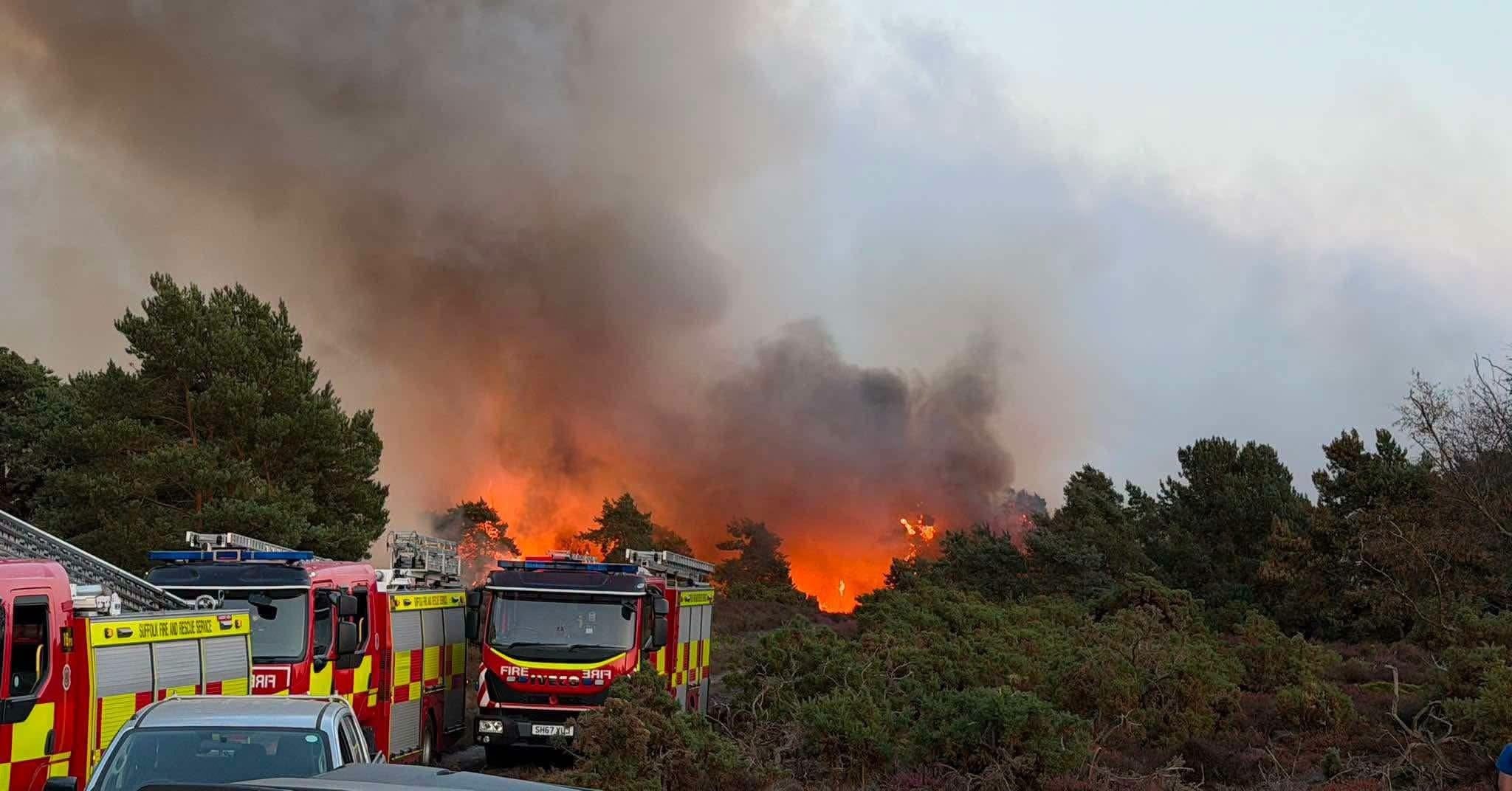
The supermarket shelves look surprisingly full, which is the odd thing when the headlines are full of shortages, wildfires and drought.
You read about salads struggling in the heat, crops burning, and livestock farmers feeding winter bales in July because the grass has stopped growing, and then you go to the shop and it is mostly fine. Not perfect, not cheap, not always the same, but full enough that you can tell yourself everything is probably alright.
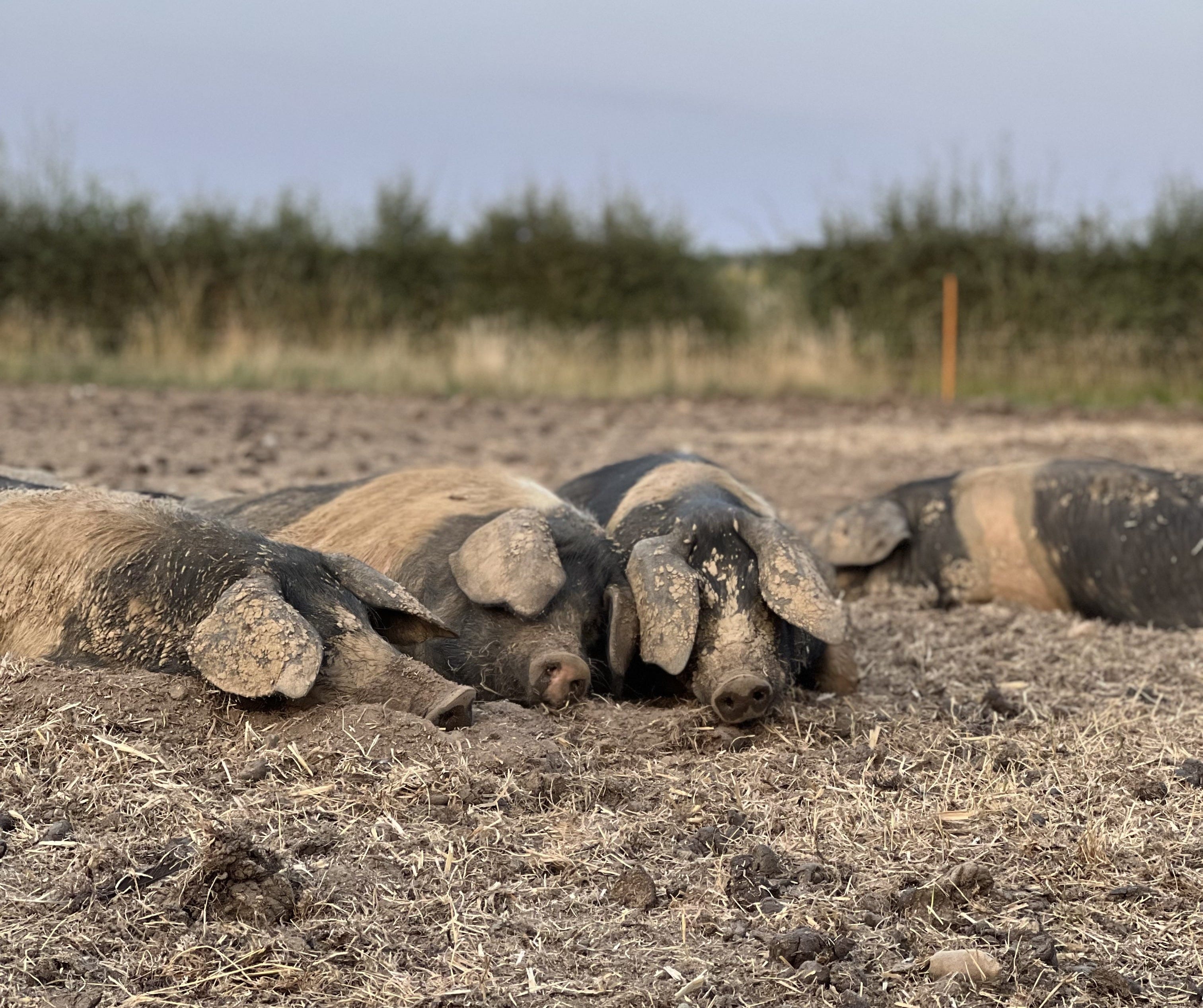
I think that is one of the reasons we struggle to talk honestly about food security in the UK, because the system is built to hide the wobble, to keep the public calm, and to make disruption look like a minor inconvenience rather than a warning.
That is why I paid attention this week when the chief executives of Tesco, Waitrose, Sainsbury’s, Aldi and the Co-op warned the Prime Minister that wildfires and extreme weather are putting Britain’s food supplies at risk, and called for urgent action to reduce our dependence on imports. I am sceptical of supermarkets by default, because their normal behaviour is to quietly fill the gaps without anyone noticing, swapping one supplier for another, flying it in, trucking it further, and keeping the shelves looking calm.
So when they start calling on government to “protect UK food security”, I do not hear a sudden moral awakening, I hear fear, and I hear it in the context of a heatwave that is not politely contained to one region. If all of Europe is being hit at the same time, there are fewer easy substitutions, the usual tricks stop working, and the quiet patching over becomes harder to do without the public noticing.
To me, that is the point where you should be worried, because if the corporations who would normally do anything to protect their bottom line are publicly warning about food security, then we are already in a state of emergency, and the emergency is not only about whether the shelves look full today. It is about what happens when the shocks keep coming, when the buffer runs out, and when the cost of keeping the system looking normal is pushed down the chain on to farmers, workers and communities.
The missing bit in this conversation is what happens to the people who actually grow the food, because it is one thing for supermarkets to call on government to act, and another thing entirely for the farmers supplying those supermarkets to be paid properly after a season like this. A letter to Downing Street does not put money back into a farm account that has already absorbed the losses, and it does not change the day to day reality of being squeezed on price while the risks keep rising.
If we want to protect UK food security, we cannot only talk about “supply” as if it is a logistics problem, because food security is also about whether farmers can survive long enough to keep producing, whether local businesses can keep employing people, and whether the stewards of our countryside can afford to stay on the land.
The wildfires make it harder to look away, because a shortage is one thing when it is a number on a spreadsheet or a slightly different label on a cucumber, and it is another thing when you can picture a landscape burning.
A fellow Substack writer, Becca, is a dairy farmer on the Isle of Wight, and her cattle graze as part of conservation work on the heathland. When the Headon Warren heathland fire broke out, it was close enough to feel personal, and she described it as “devastating” to see the impact on a habitat they have been working hard to protect, as well as a stark reminder of the danger wildfires pose “especially at this time of severe drought”. With no rain forecast, she said, “the next few weeks will be a critical time to work as a community to prevent any further fires”, and she also did what farmers do in the middle of a crisis, checking where the animals were and moving livestock in an adjacent field further away from the danger zone in case the fire spread. And Becca was ready to do the other thing farmers do in these moments, which is help. Farmers know their ground, and in so many wildfires this year we’ve seen them supporting firefighters by cutting firebreaks to slow the progress of the fire.
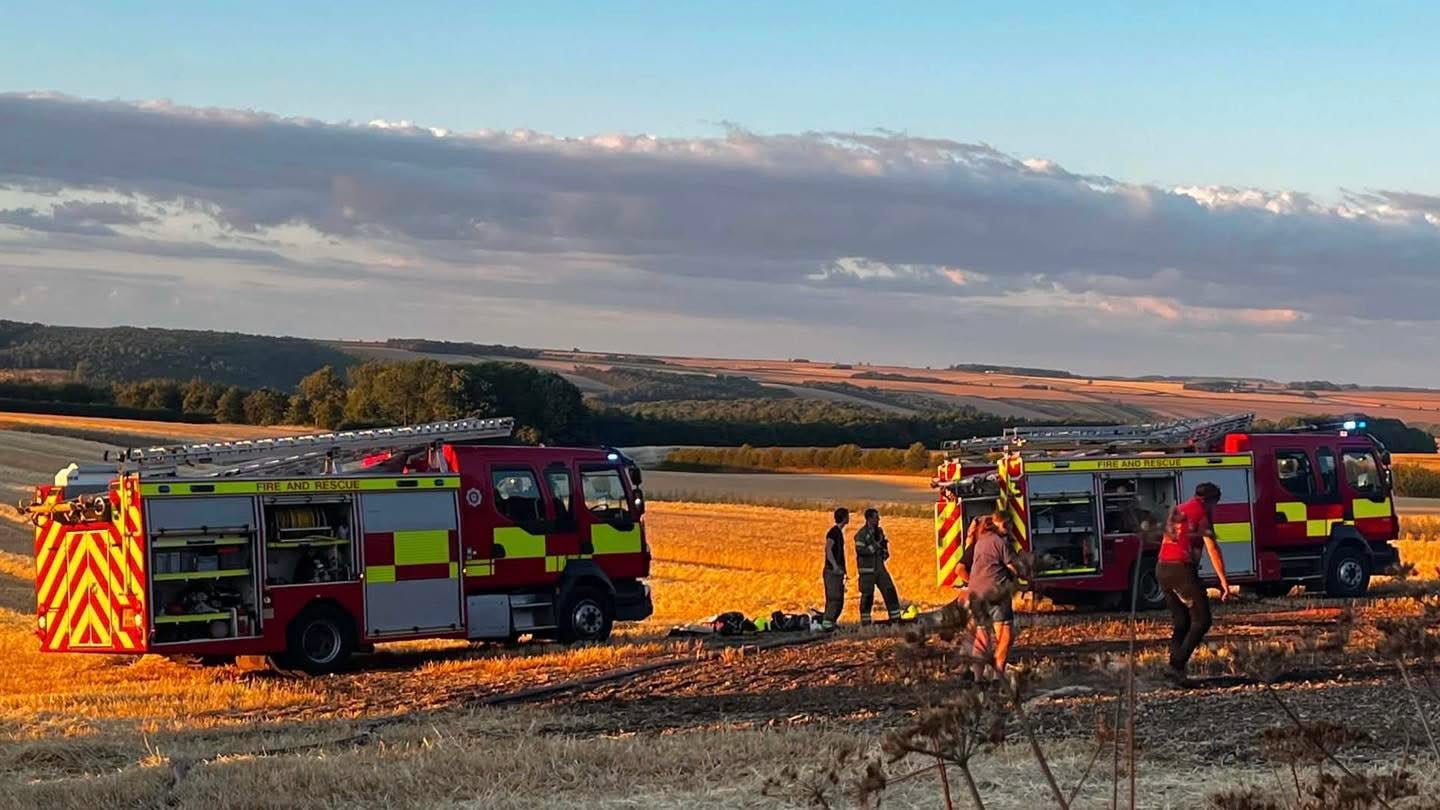
That is what resilience looks like on the ground, not a strategy document, but a decision made fast, with smoke in the air and the knowledge that you do not get to pause the season while you wait for help.
This week the Fresh Produce Journal reported that extreme heat across Europe and North Africa has squeezed cucumber supply into the UK, with Spain and Morocco seeing flowers abort in the heat, the Netherlands becoming the main market, and Dutch cucumbers reportedly selling at over £1 each. The Lea Valley Growers Association, which represents around three quarters of the UK cucumber crop, pointed out the uncomfortable bit, which is that Britain is only around 20% self sufficient in cucumbers.
That is the part I keep coming back to, because when we are not producing enough of our own food, the shelves stay full by pulling from somewhere else, and that is how modern food retail works. If one supplier struggles, supermarkets look elsewhere, and most of the time customers never notice, but this year that “somewhere else” is harder.
When heatwaves hit Spain, Morocco, the Netherlands, France, and large parts of Europe at the same time, there are fewer easy substitutions, and while the UK can and does import from further afield, and we already do all year round, the further food travels the more opportunities there are for something to go wrong. Delays, rising costs, transport problems and crop failures are not unusual on their own, but together they make the whole system more fragile, and they also squeeze UK farmers, because when retailers can source from further away they can keep pushing down on domestic prices even as costs and risks rise on farm.
The wildfires add another pressure, because heatwaves do not only make growing harder, they make the whole season more fragile, and plants under heat stress can be less productive, with flowers aborting, pollination failing, fruit setting poorly, and yields dropping as quality slips. A wildfire does not only destroy a crop, it takes months of work with it, along with fences, hedges, wildlife habitat and plans for the rest of the season, and then you still have to carry on farming the next day.
So British products can end up in shorter supply for two reasons at once, because growing conditions are worse and the losses are bigger, and that ripples through the system, because if UK supply is tighter retailers lean harder on imports, if imports are tighter because Europe is also heat hit prices rise, and if prices rise but farm gate prices do not, farmers carry the loss.
We are not only talking about a few empty shelves, we are talking about knock on effects that show up months later, when the weather has moved on and the headlines have too, because drought does not only mean less salad, it also means livestock eating winter feed in July.
Across parts of the UK, grass has stopped growing, fields that should be carrying stock through summer are brown and tight, and farmers are opening bales and feeding silage and hay that were meant to get animals through the cold months. The problem is what happens next, because winter feed is not something you can magic up at the last minute, it is built through the year, cut and stored when the weather allows, and topped up with bought in grain when needed, and when you start using it early you are not only spending money sooner, you are emptying the cupboard.
This is where the heatwave story turns into something more worrying than a short term shortage, because if drought has knocked back grass growth it has also hit crops, and heat stress can make plants unproductive through poor pollination, smaller yields and lower quality, with harvests that look fine from the road but do not fill the trailer. That leaves farmers trying to replace winter feed they have already used at the same time as grain stores are harder to refill because the crops that would normally restock them are underperforming.
Animals struggle in heat too, and heat stressed livestock eat less, grow less, and can be more vulnerable, which means farmers are managing shade, water and welfare while also trying to work out how they are going to afford the winter.
The shelves still look full for now, which is probably why this conversation feels so difficult to have, because food security rarely disappears overnight, it erodes quietly, one poor harvest, one drought, one farm at a time, and by the time everyone notices we are already trying to rebuild something we have spent years taking for granted.
A note if you are reading this as a non-farmer
If you have never had to think about winter feed, here is the simplest way I can put it. Imagine your household has a pantry that has to last you from November to March, and you spend the summer filling it, and then imagine you have to start eating from it in July because the supermarket shelves are empty and the garden has stopped producing. You can do that for a while, but you will feel it later.
What you can do, if you want to protect UK food security
This is the part that matters to me, because it is the bit that is within reach, and it is the bit that actually changes who holds the power.
If you can, buy from local farmers and local food businesses, not as a lifestyle choice, but as a form of resilience. Keep money in local hands, keep skills and jobs in local places, and make it possible for farmers to be paid properly instead of being squeezed by a system that treats them as a cost to be minimised.
Not everyone has a farm shop nearby, not everyone can afford to pay more, and I am not interested in turning this into a purity test, but if you have any room to shift even a small part of your food spend, it is worth doing. A veg box, a butcher who buys locally, a market stall, a CSA, a local dairy, a direct order from a farm, a community buying group, a local mill or bakery that pays a fair price for grain, all of these are ways of keeping the value of food closer to the people who do the work.
Because if we do not want to see the stewards of our countryside disappear, they need us now more than ever, and they need us in ways that go beyond sympathy. They need a food system that pays them, and a public that understands that “food security” is not an abstract national strategy, it is the daily survival of farms.
If you want to support this work
Everything I publish is free, and paid subscriptions keep it possible. If you have found this useful, you can subscribe, share it with someone who still thinks food security is just a talking point, or upgrade to paid to help fund the time it takes to keep doing this.
If you’re interested in buying direct from British farmers, Produce and Provide is a directory of farmers and growers in the UK selling straight to the public, whether you’re a shopper looking for local food or a farmer wanting to reach more customers directly visit their website.
Links
Wildfires threaten Britain’s food security, supermarket bosses warn - The Telegraph
Farmer warns risk of UK drought may force him to stop growing vegetables - The Independent
Heatwaves cause UK cucumber shortage - Fresh Produce Journal
Heathland fire damage is 'heartbreaking' - BBC
'I woke up in the night to my field ablaze' - BBC
Farmer loses thousands after huge fire in fields - BBC
Farmers criticise government plan to counter threats to UK food security - The Guardian
Food price fears after Europe’s heatwave destroys estimated €2bn of crops - The Guardian
If just 5% of my readers tipped £1/$1 this essay would pay for itself in terms of time spent working on it.
Are people thinking outside the box on say, water? Desalination plants near the sea perhaps and piped inland to farmers? Shade for animals and even plants?
Something radical has to be considered as the weather is not going to go back to the way it was.
I will try and use locally sourced food and restart my veg box. I feel helpless watching the countryside burn.