

You’re Not Failing at Food Ethics. The System is Built This Way.
Choice matters, but power decides the price.


Food ethics can sound like a luxury hobby, not because people do not care, but because most of us are trying to feed ourselves and our families inside real constraints. Money, time, access, energy, and whatever else life is throwing at you all shape what is possible, and it helps to say that plainly. Ethical eating is not a test you pass or fail. It is a set of trade offs, and the only place to start is with the life you actually have.
Start With The Constraint
If you are on a tight budget, the most ethical thing you can do is keep yourself fed. If the cost of living has squeezed your choices down to what you can afford, the most ethical thing you can do is stop blaming yourself for a supply chain you did not design, because that is not an excuse, it is the starting point for any change that lasts.
Choices For Real Life
When people say “vote with your wallet”, it can land as judgement, especially when money is tight, and it can also slide into a kind of ideology where the answer is always “eat less meat and buy direct”, as if everyone has the same budget, the same kitchen, the same time, and a local farm shop on the way home.
I do believe in high welfare farming, seasonal food, and buying direct when you can, because those choices can keep better systems alive, but I also know they are not always available, and they are not always affordable. So here is a gentler version that is designed for real life rather than for proving a point.
Pick one thing you can do more often, and one thing you can do less often, and treat it as a way to make your food spend work harder, while nudging the needle towards the kind of food system you would actually like to live in.
More often might be:
Cook one extra meal from scratch each week.
Buy seasonal veg when it is cheapest.
Use beans, lentils, eggs or cheaper cuts of meat to stretch meals.
If you can, buy one thing direct now and then, like eggs, mince, or a veg box split with a friend.
Less often might be:
Ultra processed snacks that cost a lot for what they give you.
Takeaways that cost more than they satisfy.
Cheap meat every day, if that is currently your norm.
None of this makes you a better person. It is simply a way of making change feel possible, and therefore more likely to stick.
Ethical Meat Is Not A Slogan
I had a really good conversation this week with Mallika Basu about ethical and sustainable meat, and one thing that came through strongly for me is how frustrating the debate becomes when it turns into identity, as if you are either “a good person who never eats meat” or “a good person who defends farmers”.
Real life is more complicated than that, and if you eat meat, the question is not how to win the argument online, it is whether the animal had a life you can stand behind, and whether the system you are buying into is one you would be comfortable showing to a child.
That is why I keep coming back to “less but better”, not as a moral badge, but as a practical route to reducing harm.
The Ads Are Doing A Job, Even If You Hate Them
This week the pig industry responded to a London Underground ad campaign by Animal Justice Project, which placed 22 large posters across 12 stations urging commuters to stop eating pork. The ads are designed to shock, using a piglet next to a puppy, and a sow in a farrowing crate with the line “If she were a dog, we’d call it abuse.”
If you felt defensive reading that, that makes sense, and I am not asking you to pick a side so much as to sit with the question of what standards we think are acceptable, and who gets to decide.
I agree with the National Pig Association that this is emotional pressure, and it is not always well received, but I also think it matters that consumers see what industrial livestock systems can look like, because labelling does not reliably tell you, and it matters to say clearly that this is not what all pig farms are like.
I am not interested in a culture war between vegans and farmers. I am interested in shrinking the space where cruelty can hide, and widening the space where better farming can survive, and I think high welfare livestock farming and veganism often have more in common than either side wants to admit. Even if the diet choice is the obvious difference.
Buying Local Is Not A Lifestyle, It Is A Practice
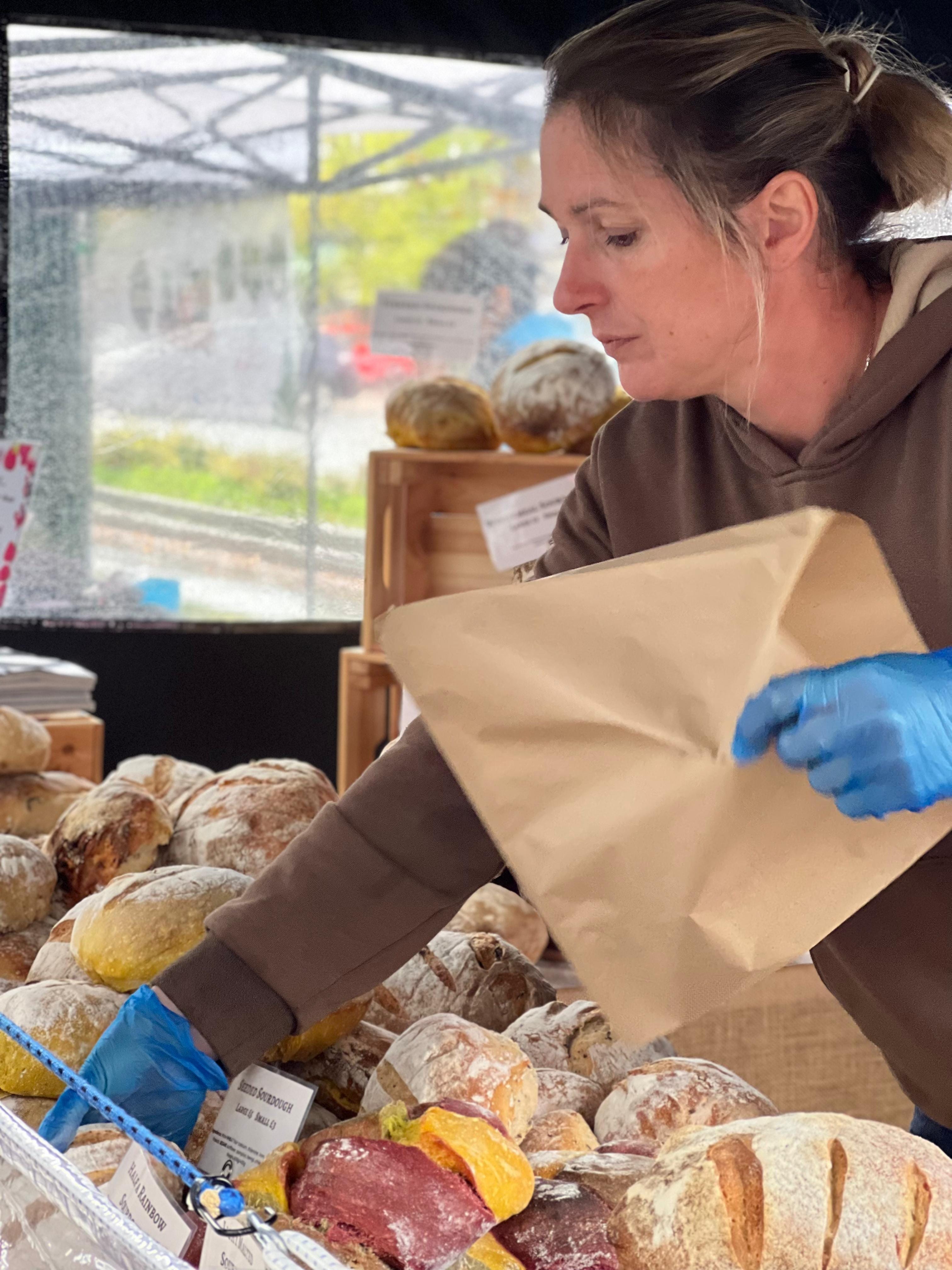
Buying direct and buying seasonal can be one of the most meaningful ways to keep high welfare farming alive. But I also understand why it can look inflated in price if you are used to supermarket prices, because supermarket prices are not the true cost of producing food. They are the result of a system that pushes costs and risk down the chain until someone else absorbs them.
If you want to support local food without blowing your week apart, start small, and treat it as a habit you build rather than a lifestyle you perform.
Find one local producer you can use once a month
Buy one item you already buy anyway, like eggs
Split a bulk buy with a friend
Use a farm shop as a top up rather than a full weekly shop
Even one regular purchase helps a farm.
Choice Matters, But The System Sets The Terms
It is true that individual choices matter, and it is also true that the system is designed to make the cheapest option the easiest option, so if you are doing your best and still buying what you can afford, you are not failing. You are living inside a food system that pushes risk and cost down the chain, and that shows up in ordinary ways.
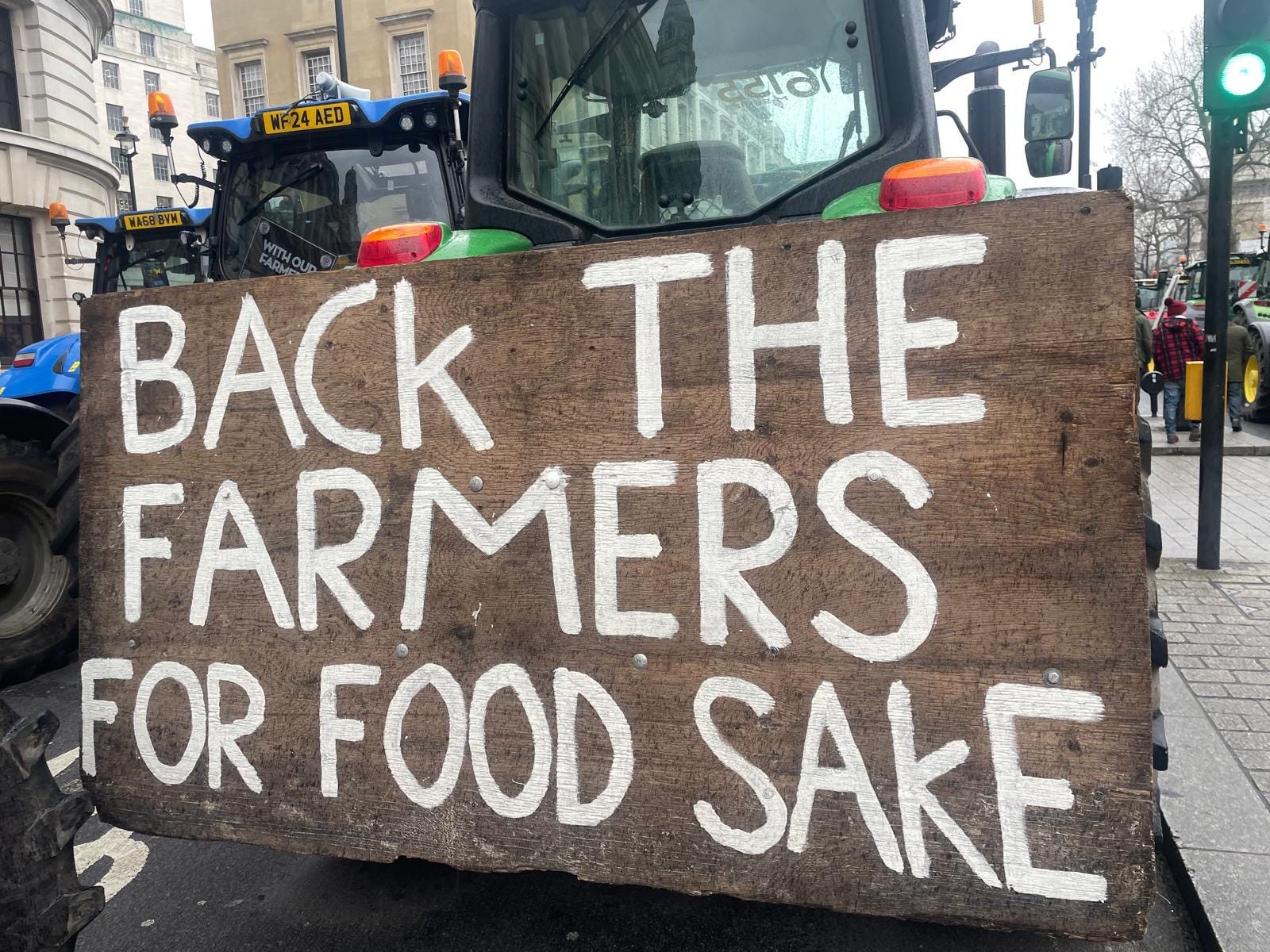
Households absorb higher prices and smaller pack sizes, and then get told it is a personal failure if they cannot “choose better”. Farmers are asked to carry price volatility and rising compliance costs while being paid as if food is just another commodity, and workers across the chain are kept on low wages so the shelf price stays competitive. Animals absorb the welfare cuts when margins are squeezed and speed becomes the priority, and if we want change that lasts, we have to deal with root causes, not just swap one shopping list for another.
That is why food ethics is not just about shopping. It is about power, labour, land, and who gets to absorb the damage.
If you want one takeaway. Do not aim for perfection. Aim for repeatable.
If you can reduce harm a little, a little more often, you are doing something real.
What Matters Most
This is not about being the “right kind” of eater. It is about making harm harder to hide, and making better food and farming easier to choose, because small, repeatable shifts matter, and so does pushing for the rules and incentives that make those shifts possible.
If you want to comment, I am interested in your pushback as well as your agreement, because the point here is not to win, it is to get closer to what is actually happening.
I write Me My Pigs and I for people who care about farming, food, and fairness, but do not want to be sold a fantasy.
If you are a free subscriber, thank you for being here. If you want to support this work, you can upgrade to paid, because paid support helps me do the deeper work, which includes the AgStacker roundtable, report syntheses, and space to approach messy questions with compassion, from a farmer’s perspective.
If just five percent of my readers tipped £1 or $1, this essay would pay for itself in terms of time spent working on it.
An interesting and thought provoking article which brought to mind a quote from the great agrarian writer and poet Wendell Berry, 'By merely existing you deny some creature the right to life'. And so we as a retired couple do what we can to buy local and buy ethically. In our local small town there is a milk vending kiosk which sells whole milk from a nearby producer/dairy farmer. It is well supported. We buy most if not all our meat from local butchers who in turn source meat locally slaughtered. It costs slightly more but not much. My wife Jan bakes all her own bread with flour bought from a mill in the Cotswolds. We are fortunate to have a large garden and grow an abundance of veg and fruit when in season. Any surplus we share with our neighbours or feed it to the hens and sheep. These behaviours didn't surface overnight and yes it's by no means convenient but still gives an old couple a reason to get out and do something.
What I appreciate here is the honesty about constraints.
Many conversations about ethical food quietly assume unlimited time, money, and access. And when those assumptions collapse, the whole argument turns into a moral lecture rather than real change.
The part that stood out to me most is the idea that ethics is not just about shopping lists but about systems.
Food choices occur within structures that shape prices, access, labour, and land use. When those structures reward the cheapest possible calories? Then the burden of fixing the system quietly falls on individuals. And they have the least room to maneuver.
I also like the framing of repeatable change. Small, durable shifts tend to matter more than perfect but fragile ideals.
Over time those habits can slowly reconnect eaters, farmers, and landscapes in ways the industrial model tries to keep separate.
It makes me wonder whether the next step in this conversation is less about “perfect consumers” and more about rebuilding local food relationships again. I mean the real places where producers, communities, and health systems start aligning. And working hand in hand towards the same goal. Producing food that actually nourishes people and the land that grows it.