

Organic is Booming Again
So why is it still stuck at 3% of UK farmland?


Organic is having a moment again.
Not in the nostalgic back to the land way. More in the practical way. People want to trust what they are feeding their families.
The Soil Association now puts the UK organic market at £3.9bn, after more than a decade of consecutive growth. Organic chicken sales are up year on year even though it is still about three times the price. Yeo Valley is reporting turnover of £230m. Demand for natural and Greek yoghurt is up sharply. If you read the coverage, the story is simple. People are worried about ultra processed foods and they are moving towards products that feel cleaner, safer, and more trustworthy.
Since I published my last piece, the Soil Association has released its Organic Market Report 2026. It puts the boom story in crisp numbers, and it also lands the uncomfortable reminder. Organic farming is still stuck at around 3% of UK farmland.
I take that seriously. I also think we need to be careful with the question we ask. Can Organic Save British Farming?
Or is that the wrong question, because it quietly suggests that a label can do the job of a functioning food economy.
This is a deliberate follow up to my last post,

Can Organic Save British Farming. In that piece I argued that organic still has teeth as a defined standard, but that the pathway can be out of reach for too many farmers, not because they do not care, but because cashflow and capacity are real constraints.
The comments on that post were the most useful part, because they showed the whole picture.
Katie Allen, LinkedIn
I’m an organic livestock farmer, beef and lamb.
I would argue that the admin is no greater than the records we should be keeping anyway, and less onerous than Red Tractor from what I’m told. However we are 100% pasture fed and zero input, so I would say our record requirements are very simple.
We do direct sell and it makes our messaging super easy, but we also sell to a meat business that buys from us because we are organic, and that certification gives them confidence in the quality of what we are producing. Being able to sell to that meat business has absolutely revolutionised our farm business income.
For us, being organic is absolutely values based, but also underpins our income too.
I think for pork, chicken, dairy or eggs, where your input costs are so much higher, I wonder how anyone can make a good profit, organic or not.
Sally Morgan, Substack
Interesting post Helen. As an organic licensee for 20 yrs I must say that I don’t think paying £550 a year for my license and inspection is too expensive when compared with other costs. It’s scaled according to land and size of business.
Everybody goes on about the onerous job of keeping records. Again once you know what records are needed, it’s straightforward, can be entered straight into apps, and makes you organised. Quite frankly they are the type of records that farmers and growers should be keeping so their finger is on the pulse of their business.
Like me knowing that my fields are producing more hay than the average even with no fertiliser, and the hay sells for twice that of conventional hay. And I don’t use fertilisers, glyphosate or pesticides so my biodiversity is booming.
Nick Coleman, Substack
My little farm is as organic as you can get but sorry not worth the hassle and expense, the ten or so beef stores I sell a year already get top price in the local market anyway. I don’t need someone else telling me how to take care of my farm. That said I certainly support farms joining these schemes, just it’s not for me.
Lancashire Lamb Boxes, TikTok
Our sales are up, and we aren’t organic. As farmers we need the ability to choose what we feel is actually the best thing to do for the animal, the farm and the farm business. Being organic sticks us in a box where we then lose some of our options. We don’t farm super differently to an organic farm, but we have freedom to do what is best for our situation and no fees for being certified.
Those voices do not cancel each other out. They are the whole picture.
Organic can be a values choice, and it can be a market access tool. It can be a useful discipline. It can also be a dead end, depending on the farm, the sector, the route to market, and how much risk you can carry.
So this post is the zoomed out version. If organic is booming again, what can it genuinely do, and what can it never fix on its own.
One more thing before we get into the detail. The question is not whether organic is growing. The question is why that growth is still not translating into land use change.
What Organic Can Genuinely Offer
Organic does offer real things that matter.
It offers a trust signal in a food system that often feels deliberately hard to read. For a shopper standing in front of a shelf, organic is one of the few labels that still means something fairly consistent. It is not perfect, but it is legible.
It also offers a different approach to inputs. In plain English, organic standards restrict the routine use of synthetic fertilisers and pesticides. That matters for farms that want to reduce reliance on bought in chemicals, and for people who want fewer residues and fewer externalities.
There is a soil story here too. Organic is not automatically regenerative, and regenerative is not automatically organic, but the overlap is real. When you build fertility through rotations, manures, legumes, and careful grazing, you are usually doing more than chasing yield with a bag and a spray.
On livestock, organic standards can raise the floor. Stocking densities, access to outdoors, and feed rules can push systems away from the worst extremes. It does not mean every organic animal has a perfect life, and it does not mean non organic farmers do not care. It does mean there is a framework that makes certain compromises harder to justify.
Organic can also make your messaging easier.
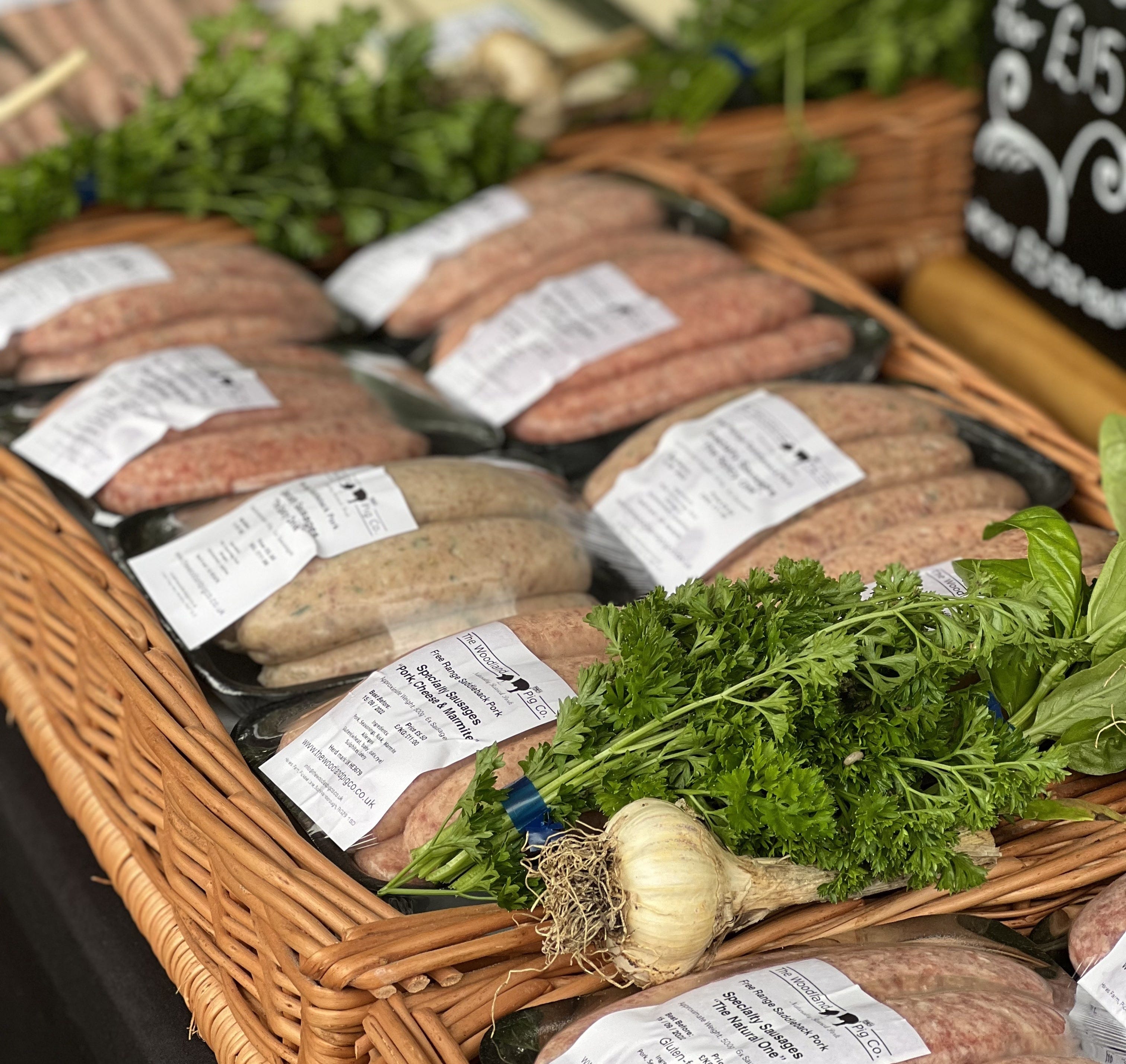
If you direct sell, the word organic can do a lot of work quickly, because people recognise it and they trust it, even if they have never read the standards.
And for some farms, certification is not mainly about the farm shop customer at all.
It is about access.
It is about being able to sell into a meat business, a processor, or a buyer who needs a clear assurance of quality, and who will pay for it.
That is the best version of the organic promise. A clearer signal, a different input model, a chance to build soil and animal welfare into the business, and a way out of the race to the bottom.
A Premium Label Cannot Fix Squeezed Prices
Here is the part that rarely makes it into the boom narrative.
Organic cannot fix the structural constraints that are breaking farming.
It cannot fix farmgate prices when the supply chain is designed to squeeze producers first.
It cannot fix land access when land is treated as an investment vehicle, and when new entrants are competing with wealth, inheritance, and tax planning.
It cannot fix processing bottlenecks. You can produce organic milk, meat, or grain, but if there are not enough local abattoirs, dairies, mills, and packers that can handle it, you are stuck. You either travel further, accept worse terms, or you do not convert at all.
It cannot fix labour and housing. You cannot build resilient food systems on insecure seasonal labour, unaffordable rural housing, and planning rules that make it hard to house workers or diversify sensibly.
It also cannot guarantee fair margins.
Certification tells you something about the production rules. It does not automatically tell you who holds the power in the contract, who sets the price, or who carries the risk.
A farm can be organic and still be underpaid. A farm can be organic and still be trapped in debt. A farm can be organic and still be one bad year away from collapse.
And this is where Nick Coleman’s comment matters. If you are already selling locally at top price, and you are small enough that your customers know you, then certification may not add value. It may just add cost, paperwork, and a feeling of losing autonomy.
That does not make organic pointless. It makes organic conditional.
The Affordability and Access Problem
This month I have been circling the same uncomfortable truth.
Food ethics on a tight budget is not a moral failure. It is a structural problem.
People are price constrained. They are time constrained. They are exhausted.
So when organic chicken is around three times the price, the headline growth figure does not tell you who is buying it. It tells you that a segment of the market can and will pay.
That is not nothing. Premium demand can keep some farms alive.
But if organic becomes a badge for the comfortable, it will not scale in a way that changes the baseline.
It will sit alongside cheap food that is produced by squeezing farmers, workers, animals, and landscapes.
If we care about farming, food, and fairness, then access has to be part of the conversation, not as an afterthought, but as a design constraint.
Where The Boom story Can Mislead
Growth stats can be true and still mislead.
A large market value sounds like momentum. More than a decade of growth sounds like inevitability.
But growth can hide concentration. It can hide the fact that a small number of brands and retailers capture most of the value. It can hide the fact that premium markets can expand while farmer poverty remains normalised.
It can also hide the conversion gap.
Demand does not automatically translate into viable farm businesses, because the costs and risks are not evenly shared.
If you are a farmer considering conversion, you can face a period where your costs rise and your yields dip, but you cannot always sell at the organic premium yet. That is a cashflow cliff.
If you are a tenant, you may not have the security to invest in long term soil building.
If you are in a region without processing capacity, you may not have a route to market.
And if you are already depleted, you may not have the cash to buy the kit and tools that make lower input systems workable at scale.
The comment threads show something more realistic. For some farms, certification unlocks a buyer and transforms income. For others, the market is already there, and the label adds little. For some shoppers, organic is a trust shortcut. For others, it is simply out of reach.
That is not a contradiction. It is the point.
Scotland as a Case Study
Scotland is a useful case study because it shows how governments are framing organic as part of bigger goals.
The Scottish Organic Action Plan 2026 to 2029 positions organic as a tool for Net Zero and biodiversity outcomes, and as part of Scotland’s global food reputation. It also comes with some concrete movement. Scotland’s organic market value is up 20.6% in five years. Scottish land committed to organic, fully organic or in conversion, grew 26.6% from 103,900 hectares in 2021 to 131,500 hectares in 2024. The Scottish Government has also stated an initial delivery investment of £200,000.
Those are not trivial signals. They say organic is being treated as a policy lever, not just a consumer preference.
But this is where I want to ask the awkward questions.
Is £200,000 remotely commensurate with the scale of the transition being implied.
Who benefits first when organic expands.
Is it the farmer taking the conversion risk, or the retailer and processor capturing a higher margin.
Does the plan tackle market access, processing capacity, and the practical barriers that stop farms converting even when they want to.
Does it address the fact that the hardest part of conversion is often not the standards.
It is the economics, the uncertainty, and the gap between doing the right thing and being paid enough to keep doing it.
If Scotland is serious about organic as part of climate and nature policy, then the plan has to be judged on whether it shifts risk away from farmers and towards the parts of the system that can actually absorb it.
This is what it looks like when organic is treated as infrastructure, not a lifestyle choice. It is also the missing piece in the 3% story.
Here is my bottom line: Organic is a tool, it is not a rescue plan.
It can be part of a better farming future, but only if it is paired with power shifts. In plain English, those shifts look like this
Farmers need a fair share of the final price, not just a premium label
We need more local processing and more routes to market, so farms are not trapped by geography
We need land access that is not dominated by speculation and inheritance
We need planning and housing rules that let rural communities function, including workers
We need public investment that matches the scale of the outcomes being asked for, and that supports farmers through the conversion risk
And we need honesty about what organic can and cannot do
Because if we sell organic as the solution, we set it up to fail. If we treat organic as one lever among many, we give it a chance to do what it does best, building trust, reducing harmful inputs, supporting soil and animal welfare, and creating a market signal that can reward better practice.
Just not on its own.
I would genuinely love to hear your answer to this.
What is the biggest barrier between you and buying the food you actually want to support?
If you are a free subscriber, thank you for being here. If you share this post with someone who cares about food and farming, it helps more than you think.
If you are a paid subscriber, thank you. You keep this work independent, and you make it possible for me to keep writing with nuance instead of chasing clicks.
If you are thinking about upgrading, this is what you are supporting. More reporting, more synthesis, and more plain English writing about the policies and power structures that shape what ends up on our plates.
Next up, I will be sharing my synthesis of the latest Soil Association reporting, and what it does and does not tell us about where organic is heading.
Sources
Scottish Organic Action Plan 2026 - 2029 - Scotland Food & Drink
‘Quality really matters’: why the organic food market is booming again - The Guardian
Organic Market Report 2026 - Soil Association
Feeding Britain - The Sustainable Food Trust
Interesting. I find it really difficult to buy organic when I’m home in Wales but I’m currently on holiday in Germany and organic produce is plentiful everywhere. I wish it was similar at home
I find this whole topic fascinating from a non-farmer's perspective, though I have, as you know, been 100 percent committed to using free-range pork and being as sustainable as is humanly possible.
What we seem to have is a dysfunctional food system (Dimbleby Report et al) that's got this way because the market was left to get on with it.
Our country has allowed - encouraged actually - that evolution, just as it's done with the water, energy, transport and telecoms sectors, which are equally important infrastructure elements. And we can see how well that worked out.
I'm not calling for nationalisation, but it's blatantly obvious that some mechanism needs to be put in place that can join up all the thinking in longer-term strategies that benefit everyone the current system, if you want to call it that, is failing.
Maybe that means a properly legislated infrastructure body that can make 10- or 20-year plans that are legally binding regardless of which colour is sitting on the government benches.
As your last six bullet points hint at, only some kind of tax-funded (or regulatory) intervention will get those changes happening.
How that would work in practice is beyond my pay grade, but I'm also pretty sure that without a seismic shift away from today's situation, not much of the improvements we'd all like to see are likely to happen.